

- 15 images
- 5 logos (5?!)
- 5 videos (make sure you have vertical!)
- 5 headlines
- 5 long headlines
- 1 short description
- 4 long descriptions
- Brand search terms (yours or competitors)
- More offline sales tracking
- More self-serve options, including in-store placements like the TV wall
- Taking the partner program (Roku, TikTok) wider
- Microsoft Click ID (is this really new?)
- something something AI
- A new hotel tool means the old hotel tool is getting the hook
- Event = measure specific interactions or occurrences on your website or app
- Key Event = measure an event that you mark as important to your business
- Conversion = measure performance of your ad campaigns and optimize bidding
Google Ad Strength: Garbage or Nah?
PPC experts are saying Google’s Ad Strength metric is garbage.
Google says:
Ad Strength is at the centre of what we’re trying to do is because creative is going to be incredibly important, and Ad Strength is going to be the mechanism which we use to evaluate that both in Performance Max and channels like search.
Kraham went on to explain that Ad Strength assesses the breadth and depth of assets within a campaign before assigning a rating. According to Google, breadth and depth of assets is crucial for reaching users across various channels, including SERPs, video display, and other creative opportunities. Google prioritizes breadth and depth of assets as it ensures campaigns are well-equipped to engage users effectively across different platforms and formats.
Putting on my assumption hat (👒), the quality of your creative determines your results. The quantity (“breadth and depth”) determines your reach (amplification, as I like to think of it).
The easier you make it for Google to place your ad in all the placement options they have, the more likely they are to choose your ad in the auction (many other algorithmic signals being equal). That means maxing out the:
(ad specs if you need them)
Part of our job as digital marketers is to be algorithm wranglers, feeding the robots.
———
No matter what you think about Ad Strength, heed this advice:
one of things you need to be aware of is Google’s recommendations are not necessarily the best things for your account
These recommendations are not personalized for your account. And are typically based on Very Large Accounts.
Shiny New Ad Toys
Walmart
it is opening up Walmart Connect to brands that have not traditionally sold their products in its stores, such as automotive and financial marketers – known as “no-endemic” marketers.
Another page from the Amazon ad playbook?
Plus:
Retail media could be a big winner of the cookiepocalypse if its reach can extend beyond classic retail use cases (like advertising a car to someone shopping for a car battery instead of just more parts sold via the retailer).
Microsoft
This month’s top story: Maximize conversion value bid strategy is now available for search and shopping search campaigns
Plus:
via Microsoft
Advertisers can add CTV to their LinkedIn campaigns through a network of partners that includes Paramount, Roku and Samsung Ads.
In addition to LinkedIn’s self-service Campaign Manager, the company also has a managed offering, LinkedIn Premiere via its partnership with NBCUniversal
Ad surprise of the year so far? Benefits of being part of the Microsoft ecosystem.
via MarTech
Google is testing a new format for search ads, the ads go in a slider or carousel that let you swipe through various ads, instead of scrolling past them.
The carousel looks a lot like the new Arc Search look for links from summary pages. Imagine it’s top 1.5 slots or bust for clickthrough and performance with this layout.
Chase (?(!))
This week, JPMorgan Chase launched Chase Media Solutions, its new digital media business. It’s the first bank-led media platform, allowing advertisers to send relevant promotions to some 80 million financial customers.
Any aggregator with first-party data in the post-cookie world could become a media network, Chase’s performance may open the floodgates.
Chase’s advantage is transactional first-party data, which allows brands and agencies to target based on purchase history… Chase customers have purchase histories across retailers and other businesses they buy from.
The immediate winners will be those closest to purchase. With time this could become the new paradigm (along with AI-powered contextual advertising).
via MarTech
Sounds like Google is kicking the tires on an acquisition of HubSpot.
This is a really interesting listen on how it fits into their plans:
Saturday Bits & Bytes | 032324
Marilynne Robinson on Biblical Interpretation, Calvinist Thought, and Religion in America (Ep. 207)
On the continuing denigration of John Calvin:
The cure, of course, is to read Calvin, which no one does, and the reason no one does is because they think they know what they’ll find. It’s very self-perpetuating from that point of view when a negative reputation is established.
Once you get a reputation it is hard to shake. And you’re rarely in control of the reputation you get.
This is especially true if you’re challenging the status quo.
5 charts on how third-party cookie deprecation will change ad buys
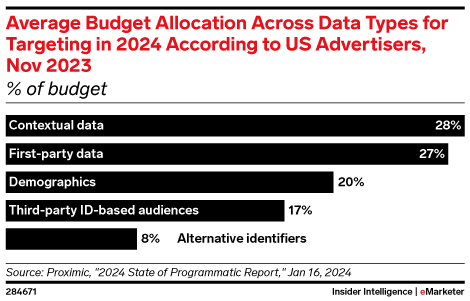
AI will turbocharge contextual targeting of all kinds.
Demographics are dead (& generations are garbage).
Microsoft Buying Ads On Google Search To Drive More Searches On Bing
When you click on the ad in Google Search, you are taken to the Bing Search results for that query.
I kind of love this strategy.
TikTok’s algorithm has always been a black box. But researchers are finally figuring it out
According to the study’s findings, between 30% and 50% of the first 1,000 videos TikTok users encounter are exploiting their past interests. Recommended videos are driven by a number of factors, most importantly whether the user liked a similar video, as well as who they follow on the platform. Fewer seem to be driven by the percentage of the video a user watched.
…
different users have very different experiences and/or are sort of treated differently by the algorithm
The algorithm is evolving. The importance of watch time may be diminishing as the pool of data deepens.
The one constant with any of the platform algorithms is that they change.
Spotify Is Launching New Ad Studio Product
Powered by a model which analyzes behavioral signals, Podcast Streams takes campaigns beyond standard targeting to reach engaged audiences who are more likely to listen to podcasts.
Limited to podcasts…for now?
I expect to see more targeting options like this across platforms as AI becomes further ingrained.
Post by @dsqtView on Threads
Friday Bits & Bytes | 032224
Evolving Google Analytics for more insightful measurement
To make it easier to compare these actions across platforms, we are aligning how conversions are defined across Google Ads and Analytics to give you a consistent view of your Google advertising performance. With that, we are introducing key events in Google Analytics that will replace what currently exists as conversions for behavioral analytics.
Say what? A “conversion” in GA4 was not measured the same as a “conversion” in Google Ads, which is…confusing.
Now (or soon, it’s still rolling out) in GA4, what had been called “conversions” are now “key events”. Conversions will appear in the Advertising reports section and match what is in Google Ads.
From Google:
If you want to know more, this video is the best resource on it I’ve seen from Google so far.
How to write a landing page that converts
Purchase Rate = Desire - (Labor + Confusion)
To increase the purchase rate, increase the visitor’s desire to purchase while decreasing their labor (effort) and confusion
translate features into the value they’ll get from using it. And proactively handle any objections they might have.
Provide no-brainer value and make it easy.
Copywriting Friday: What part of France are you from?
To increase conversions, we need to understand and remove the objections that are stopping qualified prospects.
…
Look for these three types of objections: obvious, embarrassing, and assumed. Then use your best salespeople to help you craft the strongest counter-objections.
Think about your services or processes: Which of them might you combine into a named system that implies the work is being done for your customer?
I’m looking forward to using the “Objection/Counter-Objection” method in a project soon.
Concrete language boosts sales.
from the Nudge newsletter
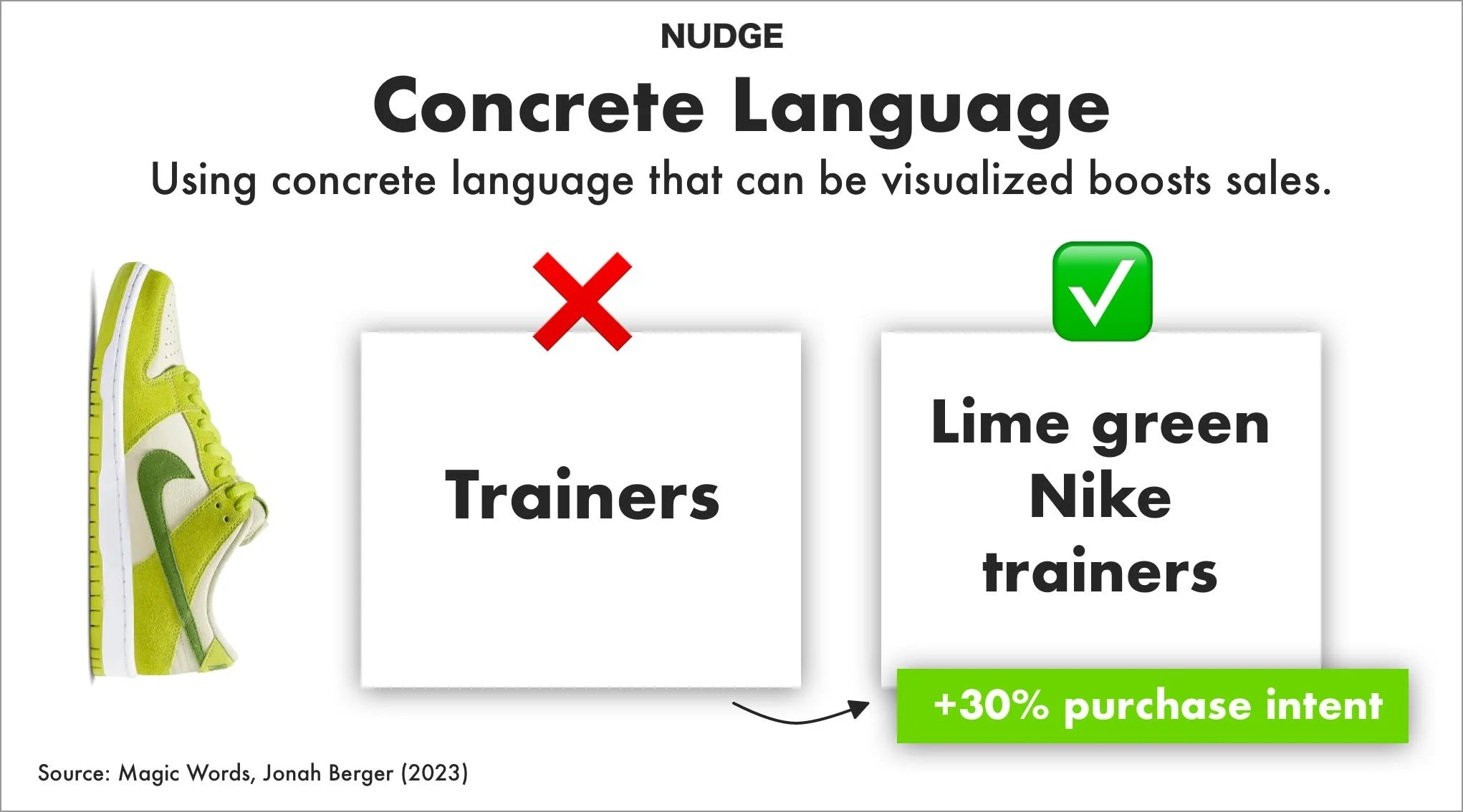
Specific, tangible language significantly increases customer satisfaction and spending.
Use clear, concrete language.
Easy to understand. Hard to confuse.
February Marks a Turnaround for Existing Home Sales
Sick of waiting for the Federal Reserve to make a move, home buyers and sellers seem to be accepting the market for what it is.
…
In February, contracts closed on roughly 4.4 million existing homes, an increase of 9.5% from the month prior
The median existing-home sales price elevated to $384,500, the eighth consecutive month of year-over-year price gains. However, the sales prices across all US homes jumped only 0.6% from January to February, which resembles pre-pandemic trends
Changes in the housing market can have far reaching ripples.