

Zag > Zig
- Spotify is serious, which means now is the time to start experimenting with its ad platform (if you haven’t already)
- Distribution matters
- Context is the new targeting paradigm
- Everything is a video platform now
- Entertainment isn’t the only content angle out there, people want to learn (otherwise, why else are you reading this right now?)
Turn On, Tune In, Dropout: Business Lessons from College(Humor)
Sam Reich, CEO of Dropout (formerly CollegeHumor), sat down with Fast Company to talk about the brand’s journey (video embedded below, podcast version here to the subscription-based niche media company it is today.
On growing Dropout:
Because we’re not in the meta-sport of growing this business, we can be very slow and responsible and reasonable about it.
It’s important to know what game you’re playing. Otherwise you won’t know the rules and you’ll be using the wrong game board.
Be honest—at least with yourself—about what your true goals are for your brand. The best goals are the ones not derived from the covers of business magazines, hustle bro tweets, or scale-worshipping podcasts.
There’s more discussion around this idea in this episode of Seth Godin’s podcast (specifically around the 13:30 mark if you want just the growth talk).
On focus:
We are really 90% focused on growing the platform. And that focus, so far, has paid off.
Or, as the modern philosopher Ron Swanson says: “never half-ass two things, whole-ass one thing.”
But! don’t lose sight of the parts that make up the one thing.
For Dropout, growing the platform means attracting new audience and keeping existing audience happy and subscribing. Those are accomplished in different ways—but can leverage a common core approach.
Know the north star goal. Develop strategies and metrics for the highest leverage inputs for that goal. The C-suite / leadership mostly just wants the north star info, everyone else needs to focus on the core inputs.
On zigging to other’s zag:
This era of hyper-premium content has created a reactionary market where folks are really interested in stuff that feels a little bit more garage band-y and authentic.
A small player can come in and be disruptive because a big player can’t adopt their business model without disrupting their existing business model.
Trying to do what the industry heavyweight(s) does but a bit better is not a viable plan. Finding the gap in their model—the unserved audience—is a winning plan.
Know the game you’re playing. Know the way you want to play it. Know the strengths and weaknesses of the other players. Know your style. Know the loophole.
The podcast version gets into a lot more of the strategy and approach.
Functional fixedness is a cognitive bias that limits a person to use an object only in the way it is traditionally used.
…
Functional fixedness is this inability to see a hammer’s use as anything other than for pounding nails
How can you defy functional fixedness in your positioning, strategy, and marketing?
Or, how can you zig where others zag?
via Wikipedia (via The Ringer)
Zig vs. Zag
Lucky vs. Repeatable
It’s so important to know the difference between the two when attempting to learn from someone. You want to try to emulate skills that are repeatable. Attempting to copy the parts of someone’s success that aren’t repeatable is equivalent to a 56-year-old dressing like a teenager and expecting to be cool.
via Collab Fund
A common practice in marketing is to look at competitors and inspirational/aspirational brands to benchmark—harvest ideas, uncover keywords, see what’s working. But it’s hard to figure out what we can repeat-like trying to reverse engineer virality.
We’re only seeing the finished product. We don’t know the process. This is the “overnight success” myth. The success is only overnight to those that weren’t doing all the work to make it happen.
you have 20 years to write your first album and you have six months to write your second one.
The returns diminish with each additional mover.
The first movers do it, then everyone does it. When everyone does it, it doesn’t work as well.
via Marketing Against the Grain podcast (📼 / ~15:24)
Timing is luck. Virality is luck. Catching a person in the perfect moment for your message to resonate is luck.
Delivering value is repeatable. One core, consistent, coherent brand message is repeatable (that’s kind of the point). Being where your customers are is repeatable (and also kind of luck).
Coming up with the slogan “Red Bull gives you wings” is lucky. Sticking with it for decades is repeatable.
When benchmarking, spend less time focusing on what your gaps and more on theirs. What channels are underused? What tones of voice are avoided? What value adds or selling points are missing?
It’s easier to build a repeatable practice in a place with low competition than it is to get lucky in a place with high competition.
Or, trying zigging when others zag once in a while.
Tuesday Bits & Bytes | 032624
Exploding Topics: Anti-Detect Browser
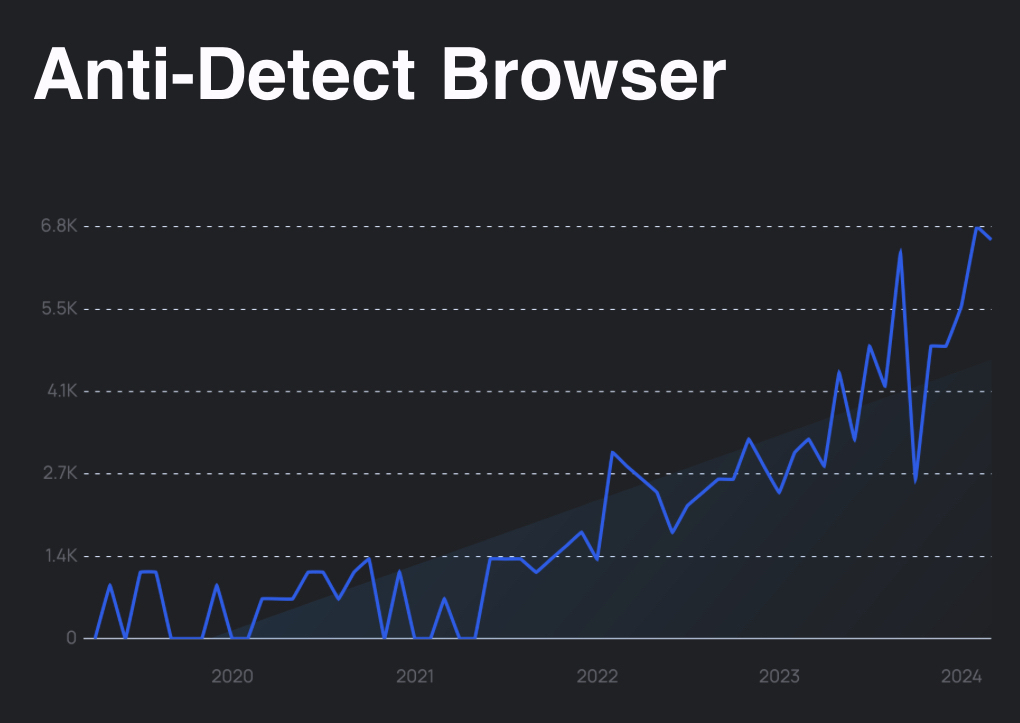
Anti-detect browsers are web browsers designed to minimize the digital footprint of their users.
These browsers use a combination of techniques (changing user agent strings, modifying the browser’s fingerprint, using a VPN, etc.) to hide or modify a user’s device and browser characteristics.
They may also block or modify JavaScript, cookies, and browser plugins that can be used to track a user’s online behavior.
…
9 out of 10 Americans consider online privacy an important issue.searches for “data privacy tools” have grown by 67% over the past two years.
The cookiepocalypse was just the start.
Spotify adds video learning courses in latest experiment
“One of the most interesting things and trends that we started noticing was more and more people were starting to come to Spotify with some intent of learning,” Jitani says. “And we thought, how can we take this core insight and build something on top of it?”
it can more directly target potential customers based on their existing listening habits. “It becomes much, much easier for us to find the right people for this course and just provide a much more efficient kind of distribution,” Jitani says.
With the experiment, Spotify is offering courses via a freemium model, similar to the one it used when it first launched audiobooks.
Many lessons wrapped up in this:
LinkedIn introduces Dynamic UTMs to optimize your web traffic through LinkedIn ads
Marketers – only one time per campaign – will add a dynamic UTM parameter to their campaign and then we’ll automatically pull in the account, campaign and/or creative name into the destination URL so it can be picked up by analytics tools, allowing marketers to more easily analyze results.
And there was much rejoicing!
Eddie Bauer changed its logo because Gen Z doesn’t read cursive
After nearly 60 years of its distinctive cursive script, the outdoor retailer is ditching the script for blocky text and a goose.
I’m torn on this one because I saw the old EB logo a lot growing up, but the new one should work way better for a lot of materials and uses. But it’s also just another chunky sans serif wordmark now.
As we start to lose more and more of the old brand aesthetics, we may also lose a lot of character (which also means there is a growing void you can launch yourself into if you’re willing to zig when others zag).
Canva acquires Affinity to fill the Adobe-sized holes in its design suite
Web-based design platform Canva has acquired the Affinity creative software suite, positioning itself as a challenger to Adobe’s grip over the digital design industry. Canva announced the deal on Tuesday, which gives the company ownership over Affinity Designer, Photo, and Publisher — three popular creative applications for Windows, Mac, and iPad that provide similar features to Adobe’s Illustrator, Photoshop, and InDesign software, respectively.
Between this and the Figma deal getting blocked, Adobe better get its game face on.
Creative is the biggest lever you have left for targeting. Canva makes it easy. This deal may make it more legit with the design crowd.
TikTok is Tops, Acura Goes Anime (Again), & A Pinterest-Shaped Opportunity (+ IKEA)
The Clock Keeps Ticking
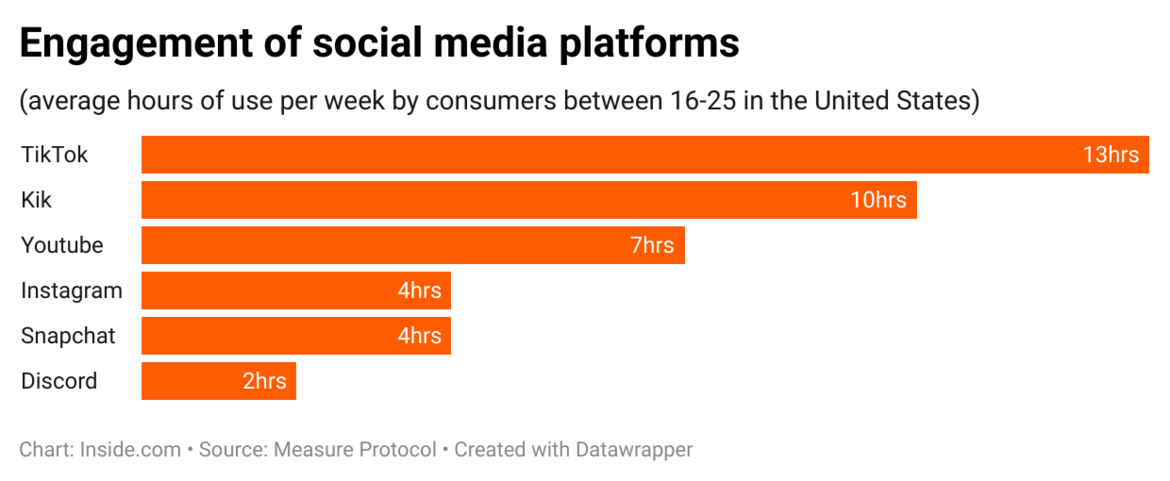
TikTok may be getting headlines for all the wrong reasons, but it seems to be proving the adage “no press is bad press.” The youths love their TikToks.
And yeah, it’s also a search engine now:
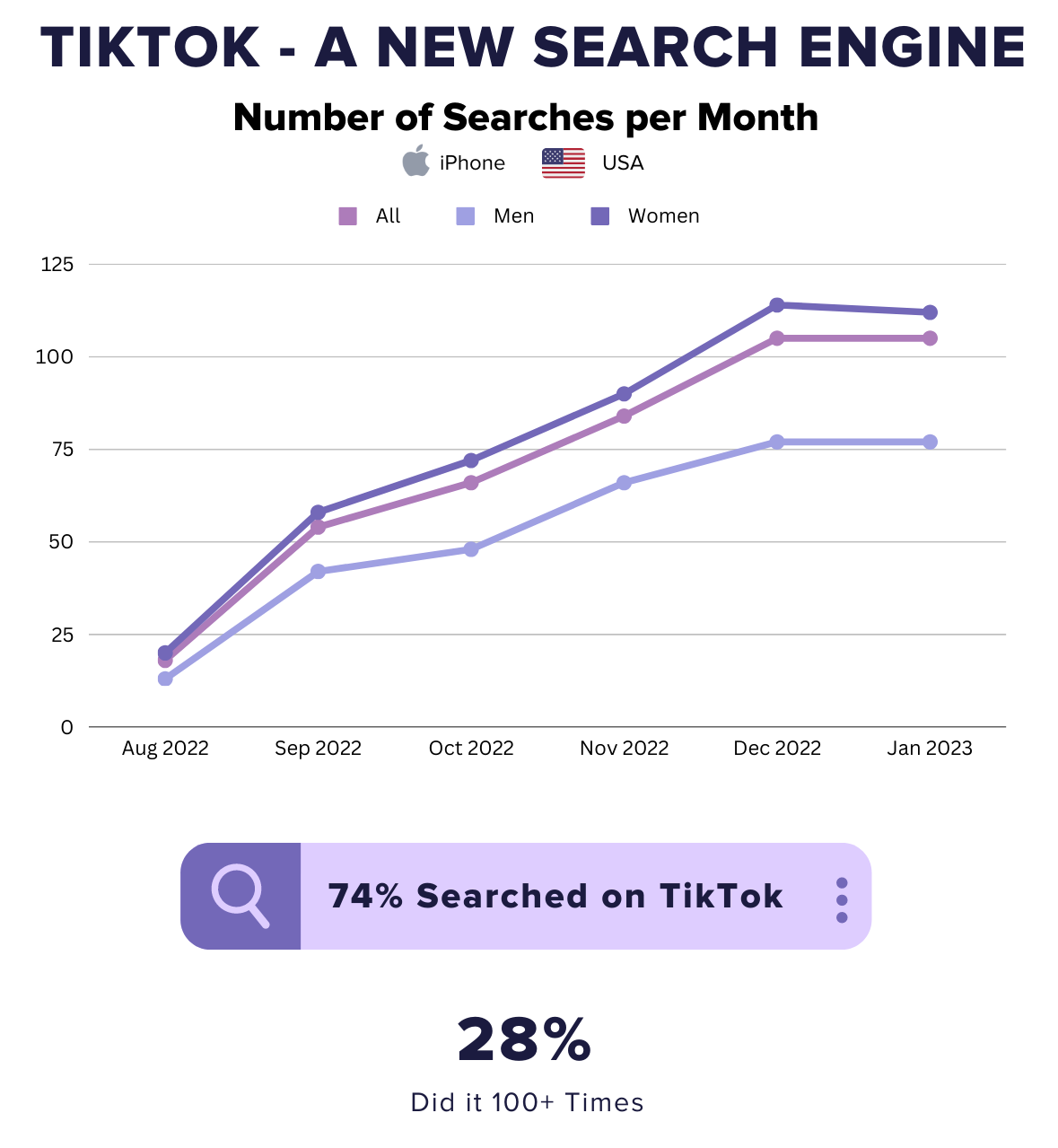
The splintering continues.
Now THAT’S What I Call Content Marketing
Acura released a (super) short anime series that racked up 275 million views. Now season 2 has dropped.
How short? 4 episodes clocking in at 60 seconds each.
Why it works: anime is popular but is (likely) largely ignored by most major brands. Cars and anime both have specific fandoms that can be reached via niche platforms, which means higher success metrics than general ones.
This is about building brand equity over the long haul. Creating an experience consumers want to engage with in a language that makes them feel part of an in-crowd is a solid formula for brand affinity down the road.
Opportunity Opens A Pinterest-Shaped Door?
Pinterest budgets are being sacrificed at the altar of performance metrics. As brands shift their focus to the bottom of the funnel, the inspiration app is paying the price. Which of course means you could benefit as auction competition lessens.
But…
Investing in brand is one of the best things you can do during a recession. As long as you can keep the lights on, brand marketing can help grow audience and mindshare for less as competitors focus solely on converting existing eyeballs.
Speaking of zigging while others zag:
While many major retailers are tightening their belts, IKEA is going all in. Everyone’s favorite (or least favorite) purveyor of meatballs and flat pack is investing $2.2B in US expansion over the next 3 years. This is apparently how much it costs to open 8 big stores, 9 smaller concepts, and employ 2,000 more people.
🗞️ Herding Headlines 04.03.23
Engage-a-thon 2023
The recent trend for social/content platforms has been expansion; free money fueled growth mode. But the Great Tech Reckoning of 2022 has reversed that.
The clearest example is Meta. A long, long time ago, Zuck split out Messenger from Facebook in an effort to capture more real estate on users’ screens (I think, the reasoning is hazy now and never made much sense to me). But now it’s getting rolled back in. More signals in one platform and less incentive to go back to the home screen and get distracted by another colorful digital dopamine drug app.
So consolidate and complement.
LinkedIn, social’s surprise Hansel, is continuing its run of feature additions geared at enticing users to spend more time on-platform. The newest push is (drum roll…) TikTok’s For You algorithm (algorithmically suggested content)! Which makes sense since the overlap of the Venn diagram of your connections and content related to your interests is almost certainly much smaller than it could be (at least that’s the case for me, so many bankers from a past career life).
Elsewhere, Spotify is shutting down its Clubhouse clone.
The company says it will continue to explore live features on its main platform.
There’s no time to try spinning up a new revenue stream generator for these companies. It’s time to try turning the money dial up to 11.
The plan for 2023: more eyes for more time in the flagship app.
Of course, ByteDance is (once again) zagging while the others zig and pushing to make Lemon8 happen. The grand ban plan b.
That Ban Plan
Congresscritters aren’t the only ones fine with banning TikTok. Survey says half of Americans are cool with it.
Unsurprisingly, the older you are the better you think the ban idea is. Same goes the more conservative you are. Ditto for knowing about the China ties and not using the app.
The Cookie Continues to Crumble
Publishers and ad tech tools are facing off once again. This time it’s all about context.
As contextual advertising continues to take the post-cookie lead, publishers are positioning themselves as custodians of attractive data. And ad tech tools are scraping the content to build their own context buckets.
Super blood moons, Mercury in retrograde, and scraping being at the heart of a digital content ownership issue, some things are like clockwork.