

Tuesday Bits & Bytes | 032624
Exploding Topics: Anti-Detect Browser
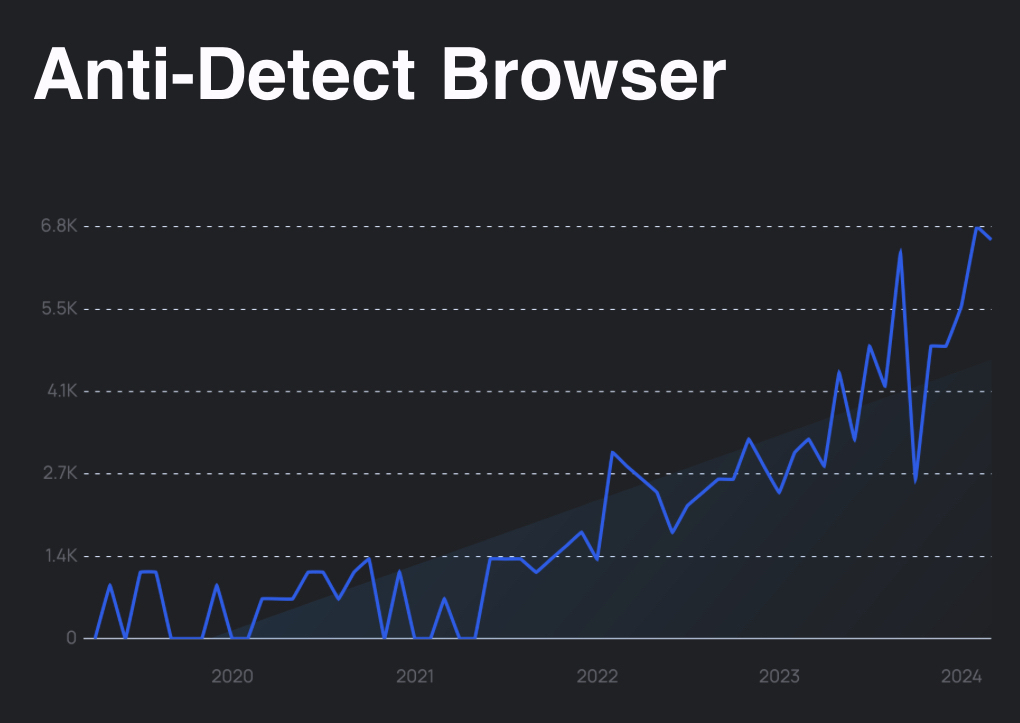
Anti-detect browsers are web browsers designed to minimize the digital footprint of their users.
These browsers use a combination of techniques (changing user agent strings, modifying the browser’s fingerprint, using a VPN, etc.) to hide or modify a user’s device and browser characteristics.
They may also block or modify JavaScript, cookies, and browser plugins that can be used to track a user’s online behavior.
…
9 out of 10 Americans consider online privacy an important issue.searches for “data privacy tools” have grown by 67% over the past two years.
The cookiepocalypse was just the start.
Spotify adds video learning courses in latest experiment
“One of the most interesting things and trends that we started noticing was more and more people were starting to come to Spotify with some intent of learning,” Jitani says. “And we thought, how can we take this core insight and build something on top of it?”
it can more directly target potential customers based on their existing listening habits. “It becomes much, much easier for us to find the right people for this course and just provide a much more efficient kind of distribution,” Jitani says.
With the experiment, Spotify is offering courses via a freemium model, similar to the one it used when it first launched audiobooks.
Many lessons wrapped up in this:
- Spotify is serious, which means now is the time to start experimenting with its ad platform (if you haven’t already)
- Distribution matters
- Context is the new targeting paradigm
- Everything is a video platform now
- Entertainment isn’t the only content angle out there, people want to learn (otherwise, why else are you reading this right now?)
LinkedIn introduces Dynamic UTMs to optimize your web traffic through LinkedIn ads
Marketers – only one time per campaign – will add a dynamic UTM parameter to their campaign and then we’ll automatically pull in the account, campaign and/or creative name into the destination URL so it can be picked up by analytics tools, allowing marketers to more easily analyze results.
And there was much rejoicing!
Eddie Bauer changed its logo because Gen Z doesn’t read cursive
After nearly 60 years of its distinctive cursive script, the outdoor retailer is ditching the script for blocky text and a goose.
I’m torn on this one because I saw the old EB logo a lot growing up, but the new one should work way better for a lot of materials and uses. But it’s also just another chunky sans serif wordmark now.
As we start to lose more and more of the old brand aesthetics, we may also lose a lot of character (which also means there is a growing void you can launch yourself into if you’re willing to zig when others zag).
Canva acquires Affinity to fill the Adobe-sized holes in its design suite
Web-based design platform Canva has acquired the Affinity creative software suite, positioning itself as a challenger to Adobe’s grip over the digital design industry. Canva announced the deal on Tuesday, which gives the company ownership over Affinity Designer, Photo, and Publisher — three popular creative applications for Windows, Mac, and iPad that provide similar features to Adobe’s Illustrator, Photoshop, and InDesign software, respectively.
Between this and the Figma deal getting blocked, Adobe better get its game face on.
Creative is the biggest lever you have left for targeting. Canva makes it easy. This deal may make it more legit with the design crowd.
Sunday Bits & Bytes | 032424
Agency Adventure is a custom, desktop video game created by Snapchat to help educate our Agency partners on the value Snapchat provides and how they can level up results for their clients and reach their audience.
Guiding question: what if you made it fun?
The idea is that there are two types of failure: abject failure and convincing failure.
…
if you execute to a high standard, one where it’d be “unlikely that another team, even with more time and effort, could succeed”, that’s a convincing failure. Under this scenario, perfect execution of the plan lets you know that you got your strategy wrong, and you can learn something meaningful for the next iteration, project, or venture.
Failing is fine, as long as it’s done convincingly.
The process is good or bad at its inception not by its result.
— Richard White (@RamblinWreck34) March 23, 2024
Consumer Brands and Essential Inputs
Collaborative Fund’s Consumer Stack Investment categories (as I interpret them):
These essential inputs become the backbone for many consumer plays.
- Deconstrucring the food supply chain to increase sustainability and improve health outcomes (e.g. “cultivating fat as an ingredient”)
- Breakthrough tech that decarbonizes products and processes (e.g. turning CO2 into textiles)
- Breakthrough tech that makes supply chains more flexible (e.g. perishable goods not requiring a full truck load to ship)
Back the inputs, pave the way for the future.
The one AI-related existential risk I’m worried about
TL;DR: humans
Large Grocers Took Advantage of Pandemic Supply Chain Disruptions, F.T.C. Finds
A report found that large firms pressured suppliers to favor them over competitors. It also concluded that some retailers “seem to have used rising costs as an opportunity to further hike prices.”
So about those greedflation concerns…
Saturday Bits & Bytes | 032324
Marilynne Robinson on Biblical Interpretation, Calvinist Thought, and Religion in America (Ep. 207)
On the continuing denigration of John Calvin:
The cure, of course, is to read Calvin, which no one does, and the reason no one does is because they think they know what they’ll find. It’s very self-perpetuating from that point of view when a negative reputation is established.
Once you get a reputation it is hard to shake. And you’re rarely in control of the reputation you get.
This is especially true if you’re challenging the status quo.
5 charts on how third-party cookie deprecation will change ad buys
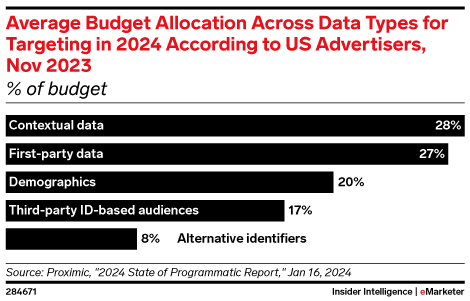
AI will turbocharge contextual targeting of all kinds.
Demographics are dead (& generations are garbage).
Microsoft Buying Ads On Google Search To Drive More Searches On Bing
When you click on the ad in Google Search, you are taken to the Bing Search results for that query.
I kind of love this strategy.
TikTok’s algorithm has always been a black box. But researchers are finally figuring it out
According to the study’s findings, between 30% and 50% of the first 1,000 videos TikTok users encounter are exploiting their past interests. Recommended videos are driven by a number of factors, most importantly whether the user liked a similar video, as well as who they follow on the platform. Fewer seem to be driven by the percentage of the video a user watched.
…
different users have very different experiences and/or are sort of treated differently by the algorithm
The algorithm is evolving. The importance of watch time may be diminishing as the pool of data deepens.
The one constant with any of the platform algorithms is that they change.
Spotify Is Launching New Ad Studio Product
Powered by a model which analyzes behavioral signals, Podcast Streams takes campaigns beyond standard targeting to reach engaged audiences who are more likely to listen to podcasts.
Limited to podcasts…for now?
I expect to see more targeting options like this across platforms as AI becomes further ingrained.
Post by @dsqtView on Threads
Friday Bits & Bytes | 032224
Evolving Google Analytics for more insightful measurement
To make it easier to compare these actions across platforms, we are aligning how conversions are defined across Google Ads and Analytics to give you a consistent view of your Google advertising performance. With that, we are introducing key events in Google Analytics that will replace what currently exists as conversions for behavioral analytics.
Say what? A “conversion” in GA4 was not measured the same as a “conversion” in Google Ads, which is…confusing.
Now (or soon, it’s still rolling out) in GA4, what had been called “conversions” are now “key events”. Conversions will appear in the Advertising reports section and match what is in Google Ads.
From Google:
- Event = measure specific interactions or occurrences on your website or app
- Key Event = measure an event that you mark as important to your business
- Conversion = measure performance of your ad campaigns and optimize bidding
If you want to know more, this video is the best resource on it I’ve seen from Google so far.
How to write a landing page that converts
Purchase Rate = Desire - (Labor + Confusion)
To increase the purchase rate, increase the visitor’s desire to purchase while decreasing their labor (effort) and confusion
translate features into the value they’ll get from using it. And proactively handle any objections they might have.
Provide no-brainer value and make it easy.
Copywriting Friday: What part of France are you from?
To increase conversions, we need to understand and remove the objections that are stopping qualified prospects.
…
Look for these three types of objections: obvious, embarrassing, and assumed. Then use your best salespeople to help you craft the strongest counter-objections.
Think about your services or processes: Which of them might you combine into a named system that implies the work is being done for your customer?
I’m looking forward to using the “Objection/Counter-Objection” method in a project soon.
Concrete language boosts sales.
from the Nudge newsletter
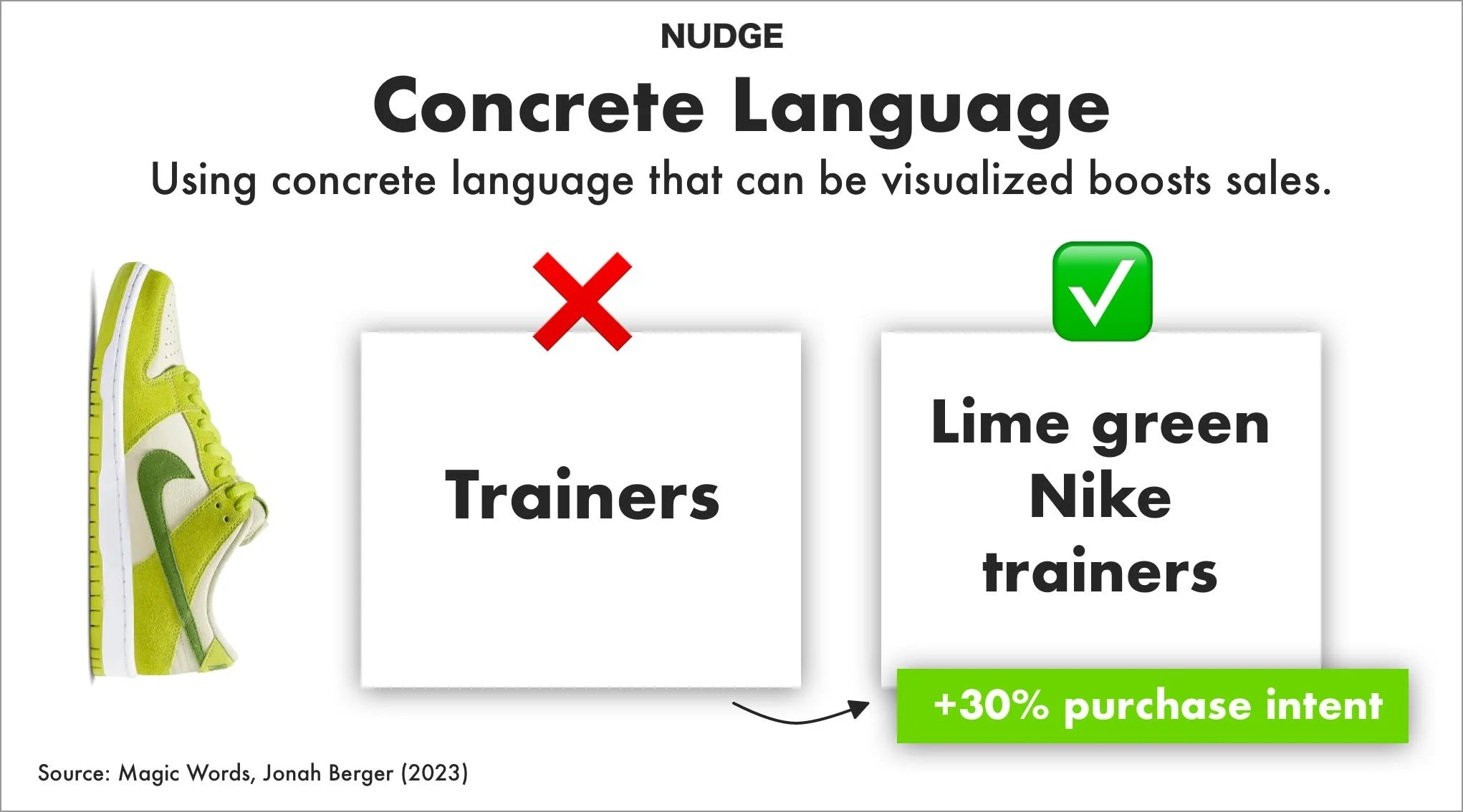
Specific, tangible language significantly increases customer satisfaction and spending.
Use clear, concrete language.
Easy to understand. Hard to confuse.
February Marks a Turnaround for Existing Home Sales
Sick of waiting for the Federal Reserve to make a move, home buyers and sellers seem to be accepting the market for what it is.
…
In February, contracts closed on roughly 4.4 million existing homes, an increase of 9.5% from the month prior
The median existing-home sales price elevated to $384,500, the eighth consecutive month of year-over-year price gains. However, the sales prices across all US homes jumped only 0.6% from January to February, which resembles pre-pandemic trends
Changes in the housing market can have far reaching ripples.