

Generation Garbage
I was getting ready to start a series of posts / resources about generations. What does each cohort gravitate towards, what are the preferred messaging mediums, etc. & so on, yada yada. All that fancy marketing speak.
But then, I read a headline (or a post (or something)). I don't think I gave too much thought at first, but it lodged itself in my brain (like all the good nuggets do), and it's stayed there. The more I thought about it, the more I realized it was right.
I wish I could give credit to the person who wrote it. I wish I could actually put that piece here to see if it does the same to you. But I (clearly) don’t remember it. So we're stuck with my (likely warped) memory.
The core of the point it was making is:
Generations Are Garbage
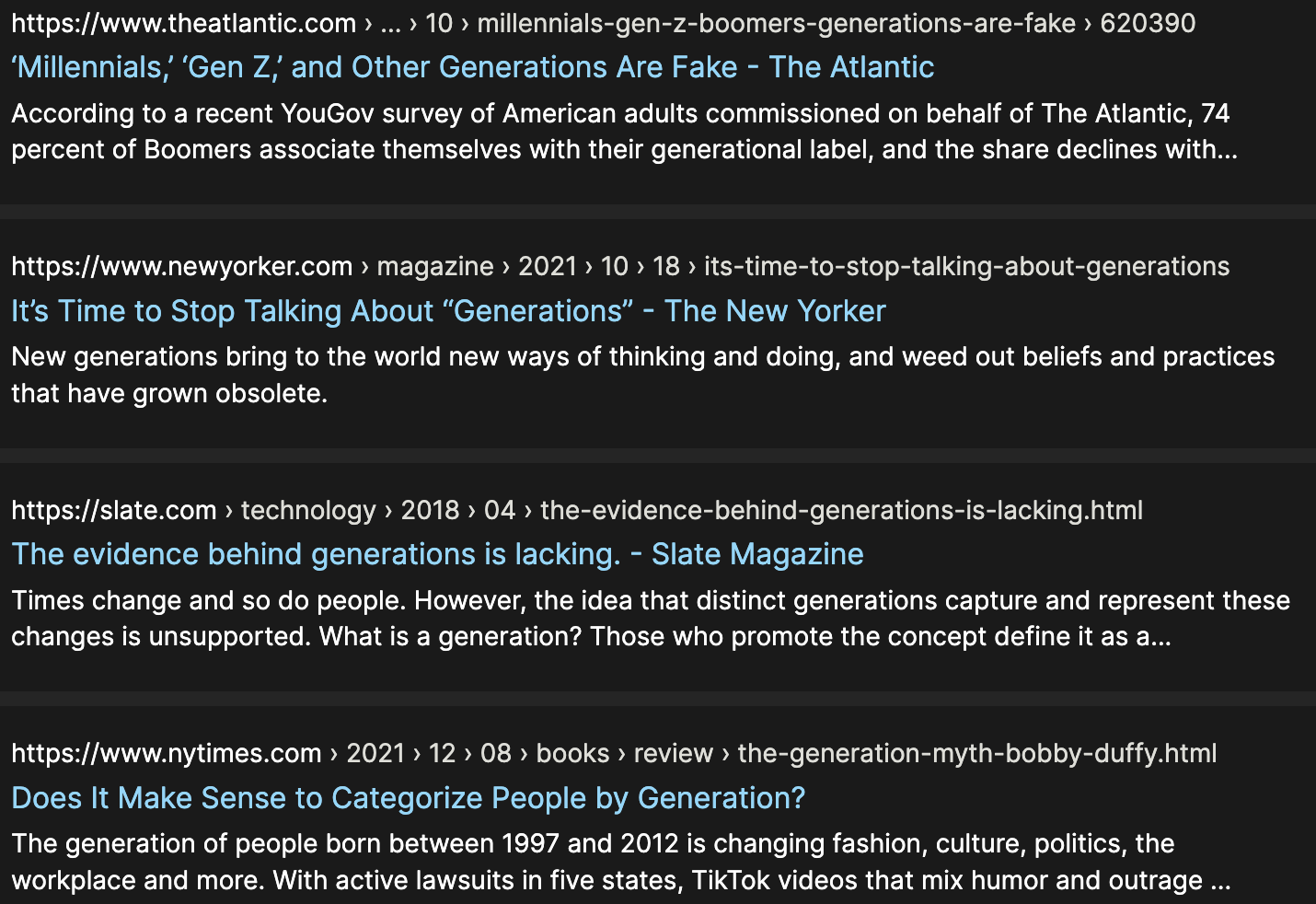
Here are some other headlines that say the same thing.
Pew Research put together a piece on this topic. It's nice to see an entity basically calling themselves out on something like this.
 Michael Dimock
Let's run through the 5 things.
Generational categories are not scientifically defined
The cutoffs for generational divides are fuzzy, which is a red flag for something based on age ranges.
It's almost like some group made them up for their own purposes and then the concept spread like kudzu. Now it's just kind of everywhere.
Generational labels can lead to stereotypes and oversimplification
Said more clearly:
Generational labels can lead to stereotypes and oversimplification.
Let's revisit something I've mentioned here before:
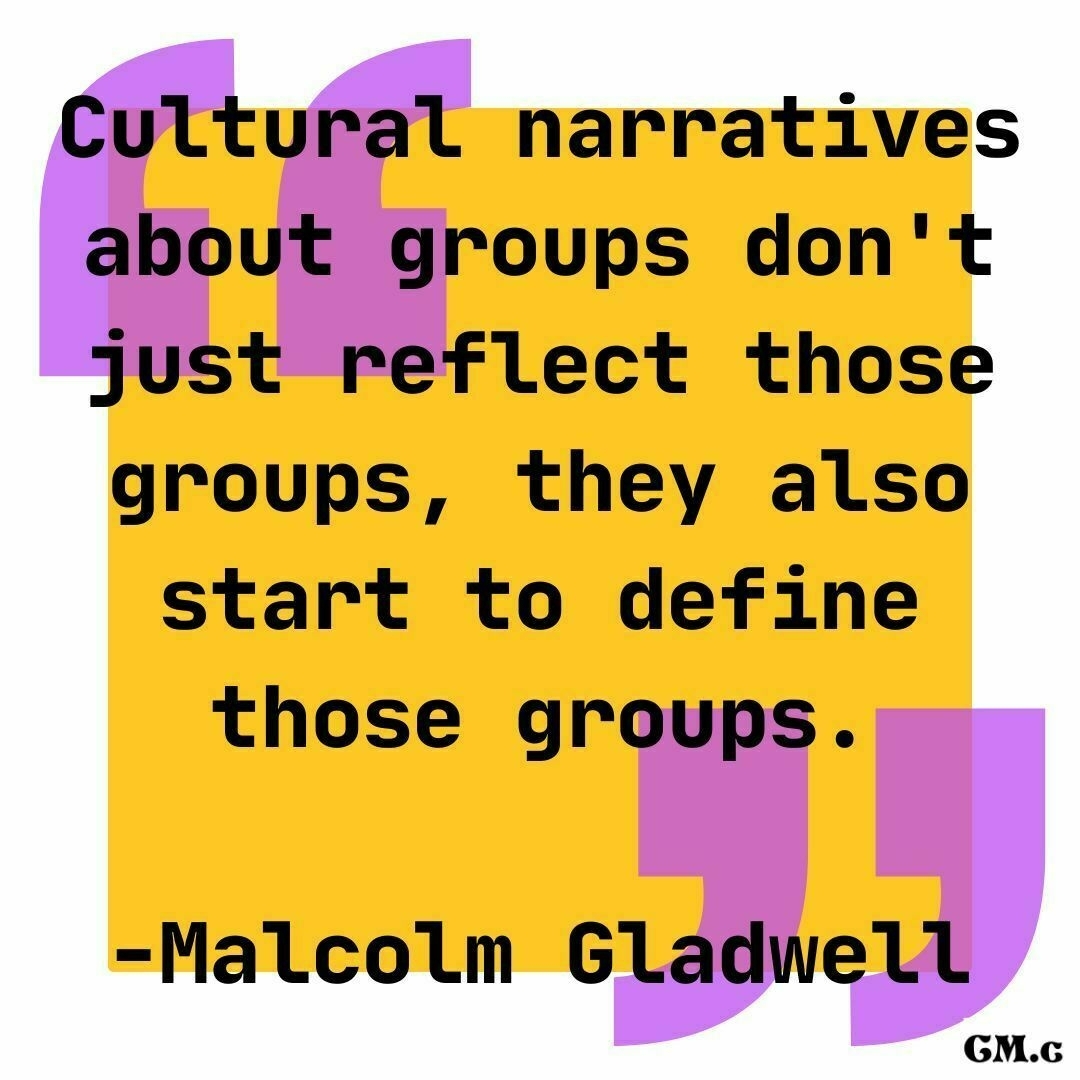
The more we try to create an identity for a generational group ("all millennials are lazy snowflakes") the less we actually engage with the group and its subgroups.
Discussions about generation often focus on differences instead of similarities
We do want to figure out what makes different audiences, well, different. Try to determine what it is that makes one audience great (for us as marketers) and another not so great.
The not so great one is not our audience. That's fine. (In fact, it's great.) Our brand isn't for everyone.
Conventional views of generations can carry an upper-class bias
They use the example of Vietnam war protesters and how high profile college campus protests earned Baby Boomers the reputation of being anti-war. But if you looked at that age range as a whole, it appears they might have been more in favor of the war than older cohorts (who had lived through previous conflicts).
The popular storyline used to define a generation was based on high profile demonstrations from a subset of the age range (an upper class subset since it was college students).
Viewing things through elite-tinted lenses is an easy trap to fall into for media and marketing peeps.
People change over time
Wait, what?!
No duh.
That's the danger of generations as shorthand though. Once a reputation is assigned, it can be hard to let it go even when the people making up that generation have grown and changed and the shorthand is irrelevant.
Of course, there are plenty of differences between age groups.
Percentage of 12th graders who have a driver’s license, who’ve ever tried alcohol, who ever go on dates, and who worked for pay at any point during the last school year. https://t.co/wBtK4YTIkX pic.twitter.com/LeGIA7wWMB
— Steve Stewart-Williams (@SteveStuWill) September 23, 2023
But this isn't about "kids these days," this is about culture change.
Older cohorts are the status quo. Younger ones are change agents.
Rock and roll.
What Are We Really Trying To Accomplish With Generations in Marketing?
The more I think about it, the less sure I get.
Here's an example, I had a client say their audience is "affluent millennial parents".
I, of course, nodded along. Because it made sense. In the moment. The "affluent" and "parents" parts I get. But wait, what did they actually mean by "millennials"?
Do they just mean people of a certain age? Do they see millennials as a group that heavily uses Instagram and they believe that can be their primary channel? Is there a unique, broadly embraced aesthetic that aligns with your brand (all millennials love millennial pink)?
When you say "millennial" or "gen z" or "boomers," what are you actually trying to say?
If you sit down and you say, “our ideal customer is Gen Z,” does that just mean you want the young crew? You want the trendsetters? What is it that you're actually trying to communicate with these generational shorthands?
Because just saying a generation name as your target audience doesn't communicate anything.
TL;DR:
So generations are garbage (which is handy for me because it means I don't have to go through creating that whole series of posts).
Don't use generational shorthands to define your audiences.
Don't say "affluent millennial parents" say "parents—heavily female—aged 25-44 (prime birth ages) who shop A, B, C brands and are interested in X, Y, Z." Or something like that.
Do the work. Know your customer.
More ads in fewer places
According to research by Tinuiti, around 31% of U.S. adult consumers currently use ad blockers, a segment that’s been steadily growing over time.
In light of That OpenAI Thing, this was a timely post.
a reasonable consensus of experts on NPOs [non-profit organizations] agrees that their governance is generally abysmal
Speaking of abstraction, it’s partly why frequent flyer programs work so well amongst the business set. The cost is abstracted away from the beneficiary.
the genius part of this incentive is that the person who makes the flight choice enjoys the loyalty program benefits rather than the person who actually buys the ticket
An important rule for incentive design:
know who pays for the product and who enjoys the incentives
It’s not always the same person.