


via the Future Forecast podcast:
Nowstalgia: hyperfast way of looking at nostalgia of things that didn’t happen decades ago but years or even months.
The nostalgia cycle is spinning so fast that the look back period is shortening to hypermodern history.
Or; the half life of attention (but not attention spans) is so short that the idea generation period has to compress to a point where sequels and building off the previous effort is the only viable option. It is impossible to both stay relevant and create from a blank slate each time.
Friday Bits & Bytes | 032924
Why Marketers need to embrace the funny when it comes to podcasting
While there’s no sure-fire formula to being funny, brands that lean into comedic ads find the effort has a good success rate.
A funny ad is a sticky ad
Marketing (and business) doesn’t have to be that serious, have some fun. It may even make your work better.
If only there were a “holiday” coming up that would let you safely try humor for your brand…
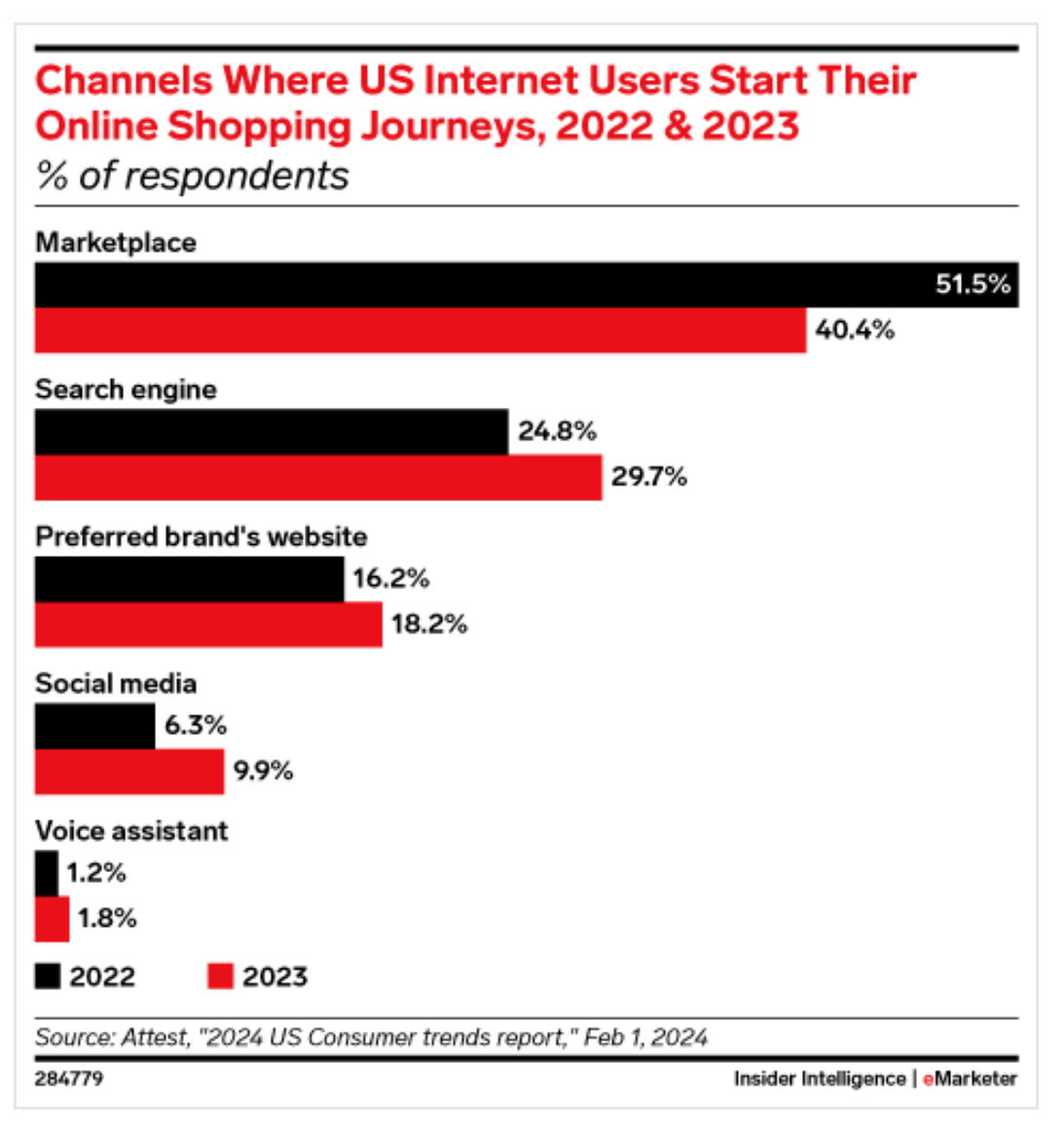
How consumers find new brands and products on social media, marketplaces, and brick-and-mortar retail in 5 charts
Here are 2:
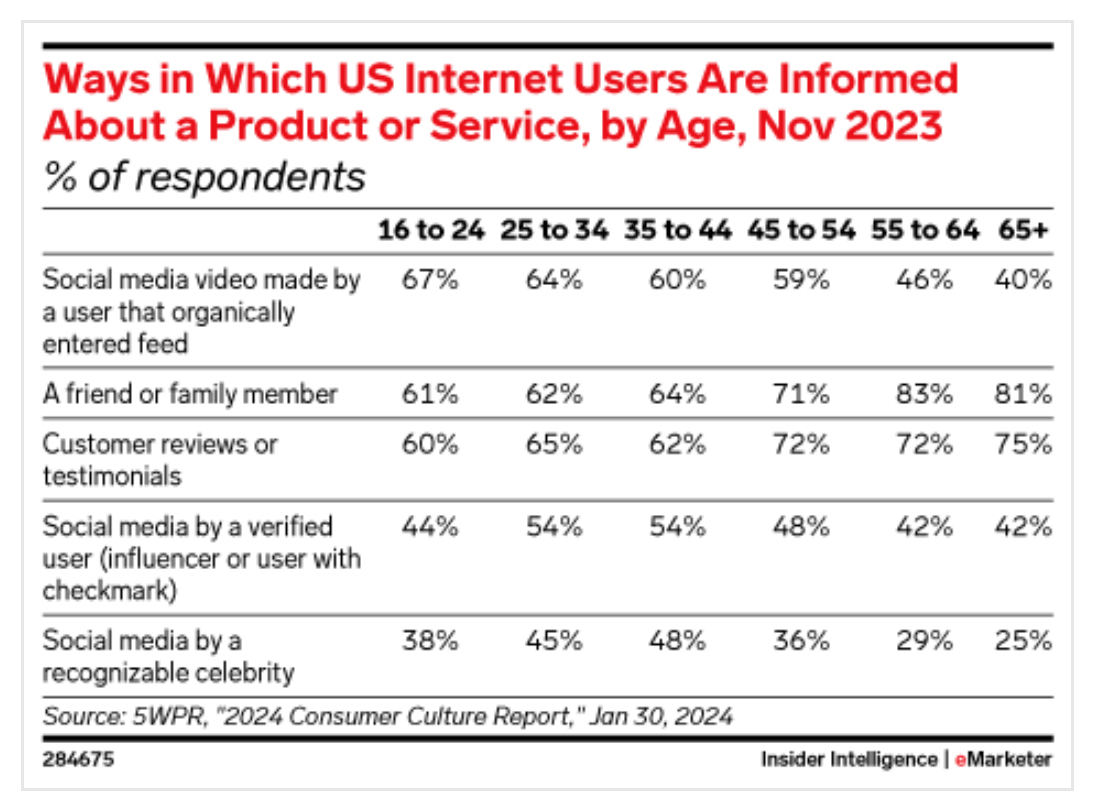
Over two-thirds (67%) of US 16-to 24-year-olds say they’ve learned about a product or service through a social media video that organically entered their feed
But
Social media is just one part of the discovery mix. Online marketplaces or search engines are the top places where US consumers start their shopping journey
Outside of impulse purchases, discovery and shopping are two different phases.
Are Lookalikes Still Relevant?
I get that lookalikes are technically a bit more specific, in theory. You could find people similar to your paying customers, for example. I wonder if advertisers simply don’t trust the newer options as much as the tried and true lookalikes.
I’m just not convinced that lookalikes are any better than these other methods. I’ve mostly abandoned them completely as a result.
I am now very interested in this question. Mostly because I’m interested in what’s working on Meta.
And because I just made a bunch of lookalikes earlier today for an upcoming campaign. Wonder if that was time wasted…
Attention Spans or Filter Quality?
Are our attention spans really getting shorter?
I hear this said a lot.
But I also know people who listen to multi-hour podcasts, read books, binge series, run/bike really long distances, write books, build apps…
Yes, some of those aren’t really the things people are talking about when they say we’re basically goldfish with thumbs. But they’re not irrelevant.
Maybe the explosion of content and choices coupled with the rapid increase in quality and professionalization of many content creators mean our bar for “bad content” is really low.
Maybe instead of having shorter attention spans we have stricter quality filters.
Wednesday Bits & Bytes | 032724
Ad Market Expands 10.4% In February
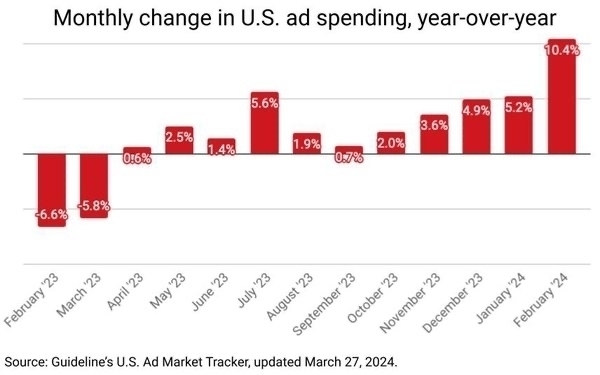
The U.S. ad market expanded at its greatest rate in nearly two years in February – increasing 10.4% over February 2023
…
February also was the 11th consecutive month to post growth, providing a further indication that the U.S. ad economy is well out of recession.
This should mean good news for the economy as a whole too.
It also explains those CPM and CPC increases I’ve been noticing.
YouTube Warns Channels Against Deleting Videos
YouTubers: Don't delete videos unless you have a very, very good reason. When you delete a video, you delete your channel's connection to the audience that watched that video. If you want to maximize your growth, keep your videos public or unlist then if you must.
— Todd B. (@hitsman) March 23, 2024
Well that’s an interesting tidbit. & is this a “normal” algorithm thing? Or; does it map across platforms?
How consumers find new brands and products on social media, marketplaces, and brick-and-mortar retail in 5 charts
Instead of putting all 5 charts here, just click the link.