

Brand vs. Performance marketing? Trick question.
Brand equity is the foundation—it’s Job #1 for any marketing team.
Brand marketing is now discovery marketing. Discovery leads performance.
Without a brand, there is no performance.
Performance marketing can drive quick sales, but it’s brand-building that gives consumers a reason to buy again and again.
Brand marketing and performance marketing aren’t two different disciplines. They’re just measured on two different timelines.
Advice from the guy behind the Gorillaz videos, Pete Candeland:
You always try to build entertainment almost like a ladder — or steps — going up to a climax. Like a little story. You want to keep people involved by giving them just enough to want to know what’s going to happen next.
In a short video, it’s about what comes in the next 20 seconds, and then the next 20 seconds, and then the next. It’s an escalating ramp-up of interest, and sometimes a ramp-up of activity and richness of imagery.
Research has shown that rhymes are more memorable. But I much prefer this way of saying it from the Weird Studies podcast
Sound—rhyme and meter, or musical measure—whether we’re talking about poetry or whether we’re talking about music is absolutely the handmaid of memory. Of how things get into the heart.
The function of your message is important. The content must be worth the attention.
But the form determines its reach. This is the vehicle of transmission.
From MediaDailyNews: Search Ads Slide As A Way To Reach Consumers
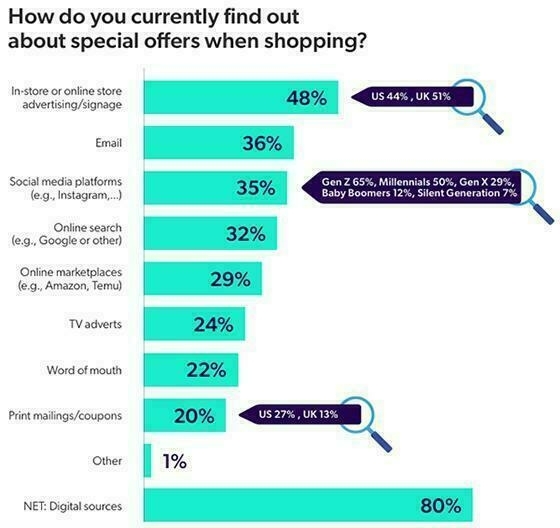
Not a new trend—and likely even more pronounced since this was published—but search is no longer a discovery mechanism.
Search is truly an intent channel—harvesting discoveries happening elsewhere.
One of the 9 F’s of Attention is Future Me.
Purchasing is an act of aspiration. Buying a future state.
As Seth Godin says, very few of our purchases are for what the thing says on the tin.
Our focus, energy and money are often spent on transactions that are disguised as something else. What we’re really doing is buying affiliation, status or the freedom from fear.
Amazon is running a beta called shop brand sites directly, which surfaces results for brands not sold on the platform, directing shoppers to the brand’s site to purchase.
Likely 1 of 2 plays here (maybe both):
- It gets monetized as an ad product
- Recruit more sellers via website referral tracking
The Walmart index is…unclear
The mega-retailer forecasts lower growth this year, saying:
“We have to acknowledge that we are in an uncertain time and we don’t want to get out over our skis here.”
More high earners are shopping for rollbacks, as value remains shoppers’ top priority.
Walmart did not factor looming US tariffs on foreign goods into its forecast, because it’s unclear if or when they’ll kick in.
inventory levels increased 3% last quarter, suggesting it may be calling in orders to get ahead of future levies.
via The Daily Upside
Retro is an evergreen trend, thanks to the One Song podcast I now have a benchmark for what that means:
Retro is almost always running on a 20 year clock
So if you want to try riding the front of the retro wave, look back 19-20 years and pick your trend to revive.
Microsoft’s Clarity is an under discussed part of the analytics toolkit (who doesn’t like free heatmaps and session recordings?), the new conversion maps feature will only make it more useful.
Conversion maps provide specific data of key business metrics of your E-Commerce sites. Through Conversion maps, you can understand your website interactions that affect your purchase rate.
Conversion maps show the conversion rate, representing the percentage of all sessions that resulted in a purchase when a user clicks in a selected area.