

Meta
- Trying to inch their way to regulatory approval
- Hoping transparency = user approval (Threads has embraced ActivityPub, maybe more openness is the future)
- Improving AI + increasing privacy makes the secret sauce less secret, so no need to act super sketchy (thought plenty see this as sketchy)
- Some forthcoming platform play
Meta expert Andrew Foxwell says the removal of detailed targeting means no more narrowing interest audiences via AND layering.
I don’t see this spelled out in the Meta post about it, but it would make sense under the “too granular” reasoning.
Also on Bluesky
From Meta:
We’re discontinuing some detailed targeting options because they are either not widely used, redundant with others, too granular, they relate to topics people may perceive as sensitive (e.g., targeting options referencing causes related to health, race or ethnicity), or because of legal or regulatory requirements.
Interest targeting is on its last legs. All hail the robots.
Also on Bluesky
From Exploding Topics:
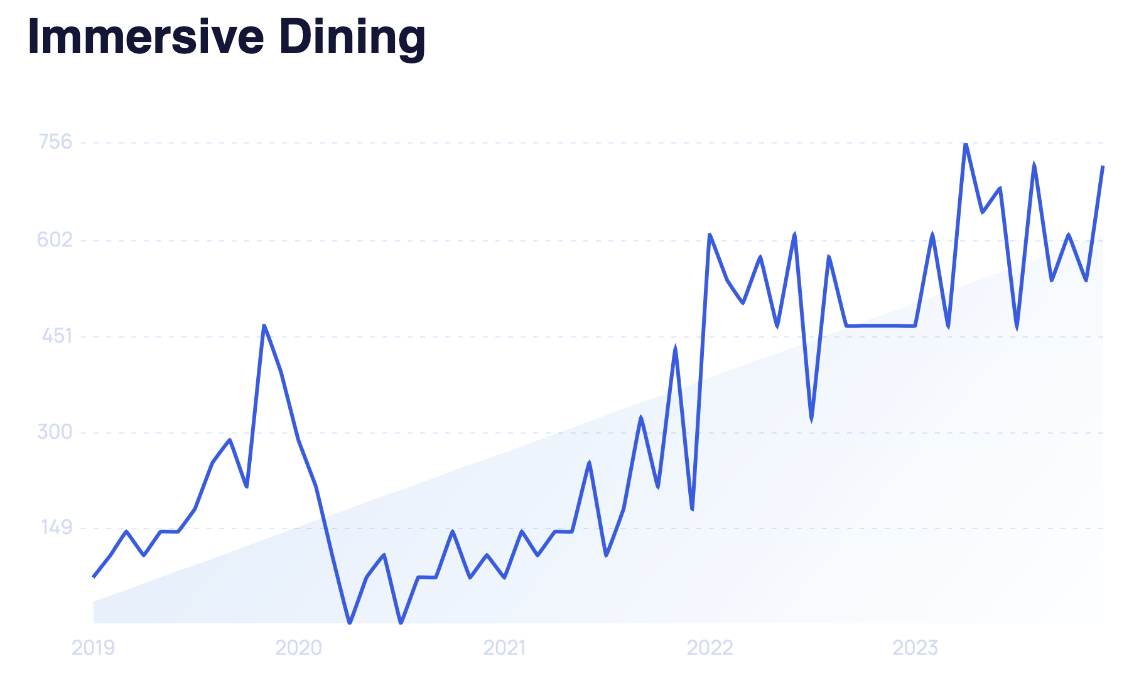
Immersive dining is part of the Immersive Experiences meta trend.
Searches for “immersive experiences” have grown by 144% over the past 24 months.
Immersive experiences have become more accessible, thanks to technologies like AR, VR, and projection mapping.
Videos about immersive experiences have over 515 million views on TikTok.
The further we get from pandemic-era lockdowns, the more the consumer pendulum swings from goods to experiences.
Also on Bluesky
Rumor has it the TikTok Shop team is 6 people strong.
More X than Meta.
The more I hear about TTS, the less I want any part of it.
Also on Bluesky
Meta’s big new announcement is…browser history?
Facebook recently rolled out a new “Link History” setting that creates a special repository of all the links you click on in the Facebook mobile app.
A few (non-exclusionary) guesses why:
via Gizmodo
Also on Bluesky
I knew Google paid Apple a lot for default search engine status, but seeing it put this way was still crazy:
Google pays Apple Inc. 36% of the revenue it earns from search advertising made through the Safari browser
This is why everyone (Amazon, Google, Meta, Microsoft, OpenAI) wants a hardware platform. They want to own the access point, because value accrues there.
Defaults are powerful. And the device can set the defaults.
Also on Bluesky
An anecdote via Andrew Foxwell on Today in Digital Marketing(https://todayindigital.com/premium/):
A company is spending $300k / month on Meta ads and it’s all being spent on 2 Advantage+ Shopping campaigns.
Meta (& Google) is an AI platform.
(Still may want to curate your placements)
Also on Bluesky
Instagram is a great illustration of the splintering of social media:
users now “post a lot more to stories, and send a lot more DMs, than they post to Feed”.
main IG feed now becoming more of a discovery platform, in highlighting the best trending, primarily video content, while the social elements shift out of public sight.
original posting has continued to decline. And without that, Meta’s apps lose a significant aspect of their appeal, and their power as connective engagement surfaces.
Meta also gleans major value from interaction, and facilitating participation
Also on Bluesky
Battery tech is one of the developmental fields I’m most interested in, and this news is why:
Swedish battery-maker Northvolt announced proudly on Tuesday that it had developed a new kind of sodium-ion battery that’s just as efficient as batteries that use precious earth metals like lithium, cobalt, and nickel, but is totally free of them.
The electrification of everything means the batterification of many things. In order for that to be sustainable, we need more than one battery formula. Especially when the current formula is just replacing oil with rare earth metals.
Also on Bluesky
Speaking of consumers wanting experiences and brand created content, Louis Vuitton (& Co) is delivering.
LVMH is building a luxury destination right in the heart of Paris, giving aspiring artisans and curious visitors a place to interact with the 280 skilled trades that power the fashion conglomerate’s 75 brands.
hope is access to artisans and the inner workings of how luxury goods are made will increase appreciation of the goods and inspire some to join the ranks.
Immersive experiential marketing meets talent recruitment. It’s like LinkedIn jumping into the metaverse.
Also on Bluesky