

Trying to decide on a color this year?
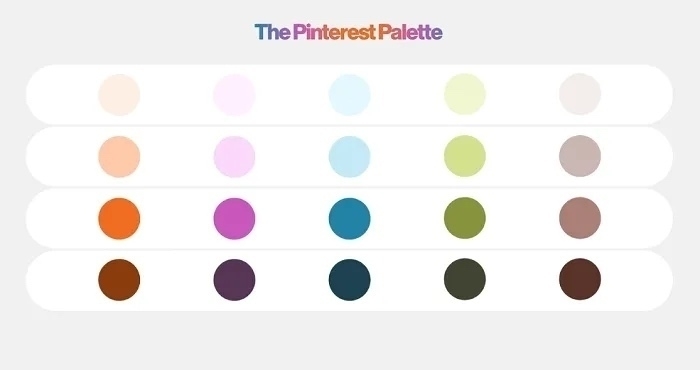
Pinterest has identified five key color palettes that will resonate with audiences this year:
- Gummy Pink
- Desert Orange
- Aqua Blue
- Moss Green
- Mocha Brown
OG journo-blogger Matt Welch on legacy media, like the Village Voice & LA Times:
Never could adapt to the new reality. It’s a success curse.
When you’re making that much money, you’re that powerful, the people who work for you—including yourselves—are not going to solve the industry once the industry turns and changes.
This is not just a media problem.
Same could be said of Google right now.
How do you change when the change threatens your business model?

Walmart is in talks to acquire Vizio, which sells a popular line of value-priced smart TVs that include an ad-supported free streaming service
which
could make Walmart a significant player in the connected-TV advertising business, competing with the likes of Roku, Amazon and Google/YouTube
via Variety
When users say “platform,” we mean software (increasingly cloud-based).
When platforms say “platform,” they mean hardware.
Every major ad platform wants a hardware platform of their own. For that sweet, sweet first-party data & to not be beholden to someone else (especially a competitor).
I’ve been waiting for TikTok’s fall, but didn’t see them being their own worst enemy
TikTok’s aggressive growth tactics are upsetting partners, creators, and everyday users
If TikTok no longer offers a stream of fun, serendipitous videos and instead becomes a social-media version of the Home Shopping Network, users may jump ship
…
“The For You used to seem uncanny in how it would serve up content perfectly tailored to me. Now it feels like the algorithm is less a diagnostic tool of my soul and instead is assessing me as a potential consumer.”
TikTok said the quiet part out loud
Think of some recent digital ads that caught your eye or spurred you to take action:
- What similarities or themes are there?
- What about them felt relevant to you?
- What made your thumb stop mid scroll/swipe/tap?
If you’re a marketer, you now have a checklist for your next campaign.
This doesn’t surprise me
Retail sales, which captures spending on all goods and food services, fell 0.8% in January
That was even lower than the downwardly revised 0.4% increase in December, and well below economists’ expectations of a 0.1% decline
Black Friday was huge and early January showed signs of slowing spend, a holiday hangover of sorts.
Tax season and spring might thaw things a bit, but we’re back in the land of general economic uncertainty (which I have thoughts on)
via CNN
I’m turning into a Google bear 🐻
Competition from OpenAI: Develops Web Search Product in Challenge to Google
Arc Search getting buzz (I’ve used it & can easily see this being a glimpse of search’s future)
It’s important to remember that each individual listener actually does experience the record in their own way.
Even though the online and streaming mentalities seem to flatten out that individual experience.
It’s important to remember that every individual listener is hearing the record their own way.
Don’t let the promise of scale and mass trick you into thinking you’re talking to a mass.