

- All ads will appear under one larger “Sponsored Results” header (like the “People Also Ask” section)
- “At the bottom of the section you’ll see a button to hide sponsored results”
Google ruling LLM 101:
chatbots now routinely incorporate into their responses fresh information from the internet or other sources through a process known as grounding
before, an LLM’s response was time-limited by the end date of its training data…through grounding an LLM can now access content beyond its training data, such as web pages in a search index, to provide more recent and more accurate information
pre-training creates a base (or foundation) model, which is then post-trained (or fine-tuned) on collections of data so that the base model can perform specialized tasks
Forgot one in my earlier post
Big G has tweaked how search ads appear now:
via The Verge
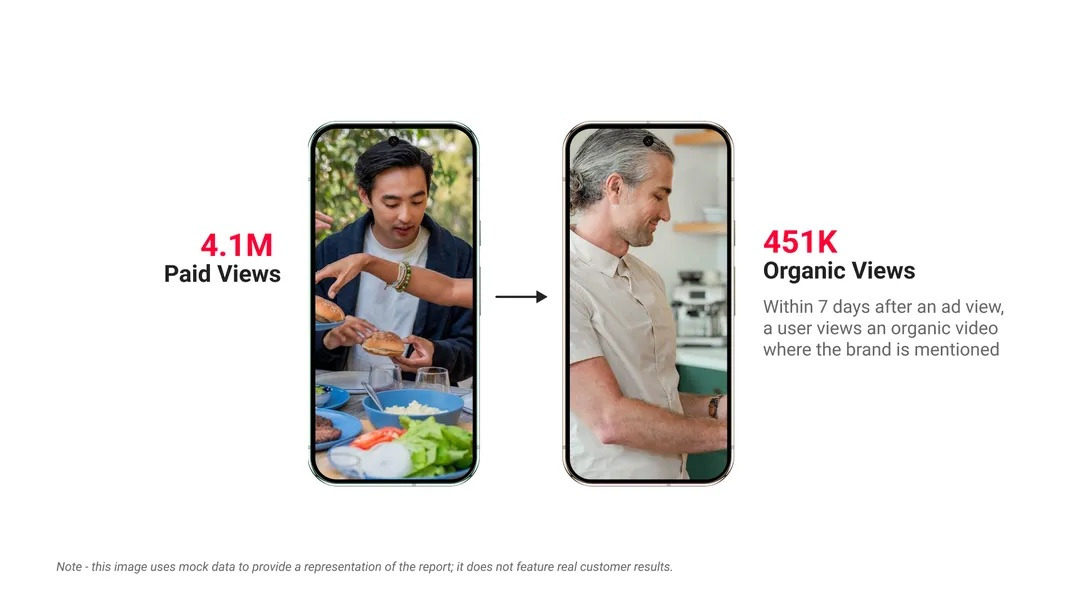
YouTube’s new Brand Pulse Report seems like it could be really useful.
evaluate your brand presence across YouTube by detecting brand mentions via visuals (brand logos, product shots, etc.) and language (audio, video titles, etc.). So, if a creator uses or mentions your product in passing, we recognize it and capture it.
incorporating metrics that demonstrate how your paid ads on YouTube can lead to more views on organic videos — a previously underreported value for paid media — and how users seeing both your paid and organic videos together leads to searches for your brand.
Coming Soon: AdsGPT?
OpenAI wants to monetize ChatGPT via ads (which isn’t a surprise, just think of the Google Search budgets waiting to be reallocated).
The company recently hired for a “Growth Paid Marketing Platform Engineer” (listing is no longer up) that :
would be responsible for “developing campaign management tools, integrating with major ad platforms, building real-time attribution and reporting pipelines, and enabling experimentation frameworks to optimize our objectives.”
There is currently an open role called Growth - AI Workflows, Martech, Creative Systems that will:
Design and launch AI-powered creative systems (dynamic content generation, automated asset production, experimentation tooling) that enable rapid, personalized campaigns across multiple channels.
&
Build and scale a modern martech stack (data pipelines, automation platforms, experimentation frameworks) that supports sophisticated targeting, measurement, and real-time optimization.
Connecting ad functionality to Instant Checkout is an obvious first step. The trap is building an ad system that looks like the current heavy hitters.
Turning responses into pay-to-play performance PR outputs kills trust.
Plopping Google Search Ads style placements somewhere in the chat pane is lazy and annoying.
Utilizing the unique understanding of a user, content, and intent to create a new paradigm of contextual advertising that provides value and isn’t reliant on hoovering up user data is the opportunity.
Beware your metrics: Google capped search results at 10 / page. No more 100 results on a page.
A lot of rankings tools are reporting issues and I’m noticing improved reported average ranks across Google Search Console accounts, likely from deep page data loss.
How are ChatGPT results changing?
Apple wants to release its own AI powered search integrated with Siri, calling it an “answer engine”. Potentially powered by a Google model.
Apple is rebuilding Siri around three core components: a planner, the search systems for the web and devices, and a summarizer. The planner interprets voice or text input and decides how to respond; the search system scans the web or user data; and the summarizer pulls it all together into an answer.
At this stage in the game, makes the most sense to build on an outside model. Maybe one less data set to figure out how to infiltrate for AI exposure?