

Trends & Macro
- auto
- food out of home
- furniture
- internet
- pet care
- utilities
Is Krampus Coming To Town?
Consumers are weird this year. They’re willing to spend, they just don’t feel good about it.
Record back-to-school spending and falling consumer confidence sent seemingly contradictory signals this year, but together they point to the trend likely to define the holiday 2026 shopping season: Consumers remain willing to spend, yet increasingly focused on value, promotions and purchase timing.
Consumers’ mood rings aren’t helped by the fact that they’re just paying more, not getting more.
growth is heavily price-driven as inflation-adjusted spending per child declined and the bifurcation between income cohorts widened further.
As we head towards the holiday season, a steady diet of political attack ads is unlikely to make people feel better.
November 3/4 is a pressure release valve. Political ad spending plummets just as retail and holiday ads are ready to fill the void. The headline machine is still spinning, but the immediacy to act is gone.
No matter what, a portion of the population is getting a dopamine hit. How long that lasts (and how it impacts spending) might depend on the level of post-election WWE cage fight we’re subjected to.
Fed rate 📈
Consumer confidence 📉
Geopolitics and inflation get called out in both releases, a potent mix for negative emotional contagion.
Q4 will be interesting as the Fed reports:
While uncertainty remains elevated…domestic spending has been resilient
& the Conference Board says:
Consumers still anticipated their household incomes to rise, but less so compared to previous months
Add in midterm election season and I’d say we’re in the midst of a negative hype cycle.
Will shoppers go with austerity or retail therapy?
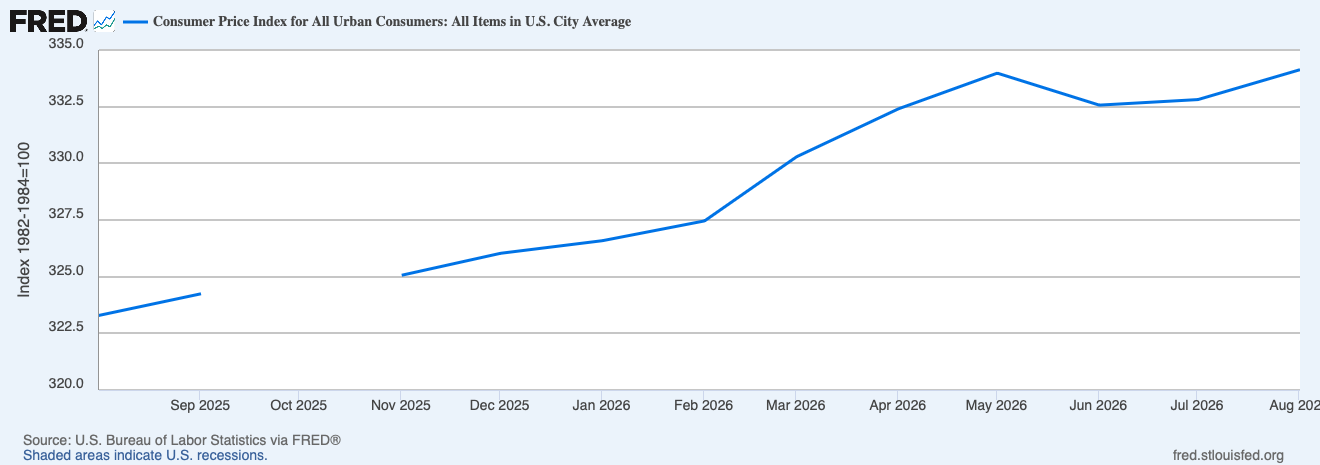
CPI ⬆️
Consumer sentiment ⬇️
With a resurgence in fuel prices and trade tensions, consumers anticipate greater pressures on their pocketbooks to come.
Some of this is prisoner of the moment type thinking, but the current moment isn’t making people feel good about spending money.
The consumer price index edged up slightly over July (which was basically flat with June), but…
The index for gasoline rose 3.9 percent in August, accounting for over one third of the monthly all items increase. The index for energy increased 2.1 percent over the month.
It’s a continuous pressure applied to people’s wallets.
Prediction markets for the Fed raising rates jumped after the BLS release.
Continuing my recent series of posts about the consumer mindset…
What is “value” for consumers?
value is increasingly defined not simply by price but by a product’s ability to meet specific needs, improve daily life, and deliver a meaningful period of ownership.
For tech, this is
products that deliver stronger utility, productivity, and long-term value
creating opportunities for brands that clearly connect innovation with everyday consumer needs.
Price is the cost.
Value is the return.
Even consumers want a positive ROI.
via Circana
Consumer confidence dipped in August. Thanks expectations!
Gas prices remain top of mind, while
Comments about war/conflict, food/groceries, trade, and jobs rose in August.
People are planning less discretionary spending on experiences. Things people still plan to spend on include:
All in line with yesterday’s needs based buying post.
The Expectations index includes Q4. I expect early planning, flighted purchasing, and strong deal seeking during Black Friday and holiday sales.
Circana has a good post on recent consumer spending habits.
The era of value-seeking is being replaced by needs-based purchasing behavior.
Discretionary purchasing is pulling back
&
Growth is more concentrated among higher-income households and a narrowing set of categories, particularly those that deliver clear value, convenience, health benefits or affordable enjoyment.
4 vectors of tangible life improvement.
The IMF’s global economic growth target dropped to 3% next year. So prepare for more grumblings about prices and inflation.
The takeaway: disgruntled shoppers will be hunting for deals and trading down for longer.
Why the forecast drop?
The outlook is uneven: The war shock is weighing on energy importers and vulnerable economies, while AI-driven demand is lifting countries integrated into the global technology value chain.
Global disinflation has stalled. Risks are more balanced than in April, but downside risks from renewed conflict and financial market repricing persist.
The BLS Shops the Produce Aisle 🍅 📈
Tomato prices have surged nearly 40% in April, reflecting broader inflation trends driven by rising fuel costs and impacting consumer wallets as summer approaches.