

Gas Pump Economics
- auto
- food out of home
- furniture
- internet
- pet care
- utilities
- 5 cents higher than yesterday
- 20 cents higher than a week ago
- More than 1 dollar higher than a year ago
Is Krampus Coming To Town?
Consumers are weird this year. They’re willing to spend, they just don’t feel good about it.
Record back-to-school spending and falling consumer confidence sent seemingly contradictory signals this year, but together they point to the trend likely to define the holiday 2026 shopping season: Consumers remain willing to spend, yet increasingly focused on value, promotions and purchase timing.
Consumers’ mood rings aren’t helped by the fact that they’re just paying more, not getting more.
growth is heavily price-driven as inflation-adjusted spending per child declined and the bifurcation between income cohorts widened further.
As we head towards the holiday season, a steady diet of political attack ads is unlikely to make people feel better.
November 3/4 is a pressure release valve. Political ad spending plummets just as retail and holiday ads are ready to fill the void. The headline machine is still spinning, but the immediacy to act is gone.
No matter what, a portion of the population is getting a dopamine hit. How long that lasts (and how it impacts spending) might depend on the level of post-election WWE cage fight we’re subjected to.
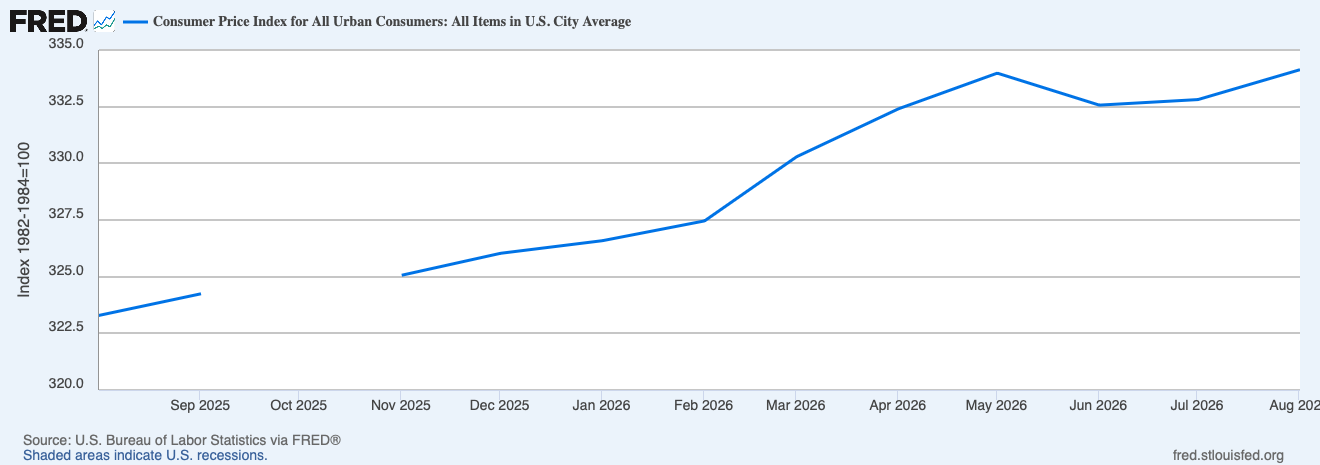
The consumer price index edged up slightly over July (which was basically flat with June), but…
The index for gasoline rose 3.9 percent in August, accounting for over one third of the monthly all items increase. The index for energy increased 2.1 percent over the month.
It’s a continuous pressure applied to people’s wallets.
Prediction markets for the Fed raising rates jumped after the BLS release.
Consumer confidence dipped in August. Thanks expectations!
Gas prices remain top of mind, while
Comments about war/conflict, food/groceries, trade, and jobs rose in August.
People are planning less discretionary spending on experiences. Things people still plan to spend on include:
All in line with yesterday’s needs based buying post.
The Expectations index includes Q4. I expect early planning, flighted purchasing, and strong deal seeking during Black Friday and holiday sales.
Wallet pressure waits for no store. Walmart is feeling the squeeze.
The Bentonville, Arkansas-based retailer said heightened petrol prices are to blame for the slowdown in spending.
“When fuel prices increase and get above $4, perhaps there’s a psychological impact to that … consumers are making trade-offs,” CFO John David Rainey said on a call with analysts on Thursday.
As consumers spend less, each potential purchase needs to work harder to close the sale.
Q4 is looming
Shoppers are still spending, but gas prices are stretching the dollars in their pockets and credit is starting to fill the gap more.
The wheel is spinning again for the ongoing gas pump roulette that’s harshing the vibes.
Hot staycation summer?
📈 ⛽️
The BLS Shops the Produce Aisle 🍅 📈
Tomato prices have surged nearly 40% in April, reflecting broader inflation trends driven by rising fuel costs and impacting consumer wallets as summer approaches.
Consumer sentiment ticked down a pinch, current conditions took a hit (gas pump economics).
About one-third of consumers spontaneously mentioned gasoline prices and about 30% mentioned tariffs. Taken together, consumers continue to feel buffeted by cost pressures, led by soaring prices at the pump. Middle East developments are unlikely to meaningfully boost sentiment until supply disruptions have been fully resolved and energy prices fall.
Speaking of inflation:
current reading still substantially exceeds the 3.4% reading seen in February prior to the start of the Iran war,
⛽️🗺️
Only a $0.258 increase in gas prices since this time last week, slipping in under the back-to-back $0.30 mark.
Fun with extrapolation: at this rate we’re looking at $5.00 / gallon gas prices in time for Memorial Day weekend.
⛽️🗺️
On 4/30, AAA posted this headline: Oil Prices Spike, National Average Up Nearly 30 Cents in One Week
The national average (for regular) was then pegged at $4.300.
Today (5/4), the national average is $4.457. This headline might get recycled this week.
This is Ozempic for wallets.
⛽️🗺️
Fill your tank, empty your wallet.
AAA’s fuel price tracker shows as of today, average national price per gallon is:
In March, Bank of America was already reporting:
spending at the pump surging 16.5% month-over-month
Gas pump economics: the more money is pumped into tanks, the less disposable income is left for discretionary and status purchases.
⛽️🗺️