

I’ve been waiting for this:
Amazon brings generative AI to Alexa
I think once generative AI models and smart assistants are merged, we’ll view the previous iterations like we do old text-based dungeon crawler games.
Especially once we hit the SkyRim version of smart assistants.
Remember that Apple announcement about removing link tracking in Safari (private browsing plus iMessage and Mail)?
It’s here!
It impacts:
- HubSpot
- Drip
- Google Ads
- Google Display Ads
- Instagram Ads
- MailChimp
- Adobe Marketo
- Microsoft Ads
- Yandex
- & more!
UTMs survive.
Huh…
some TikTok users are now seeing a new prompt appear within their search results in the app, which includes a CTA to expand their search on Google.
I’m not sure if this is a “keep your enemies closer” play or a weird “we’re both under regulatory scrutiny so let’s team up” play.
I guess TikTok can use it to disclaim Chinese info control claims.
And Google can gain traction with the youths?
The Future?
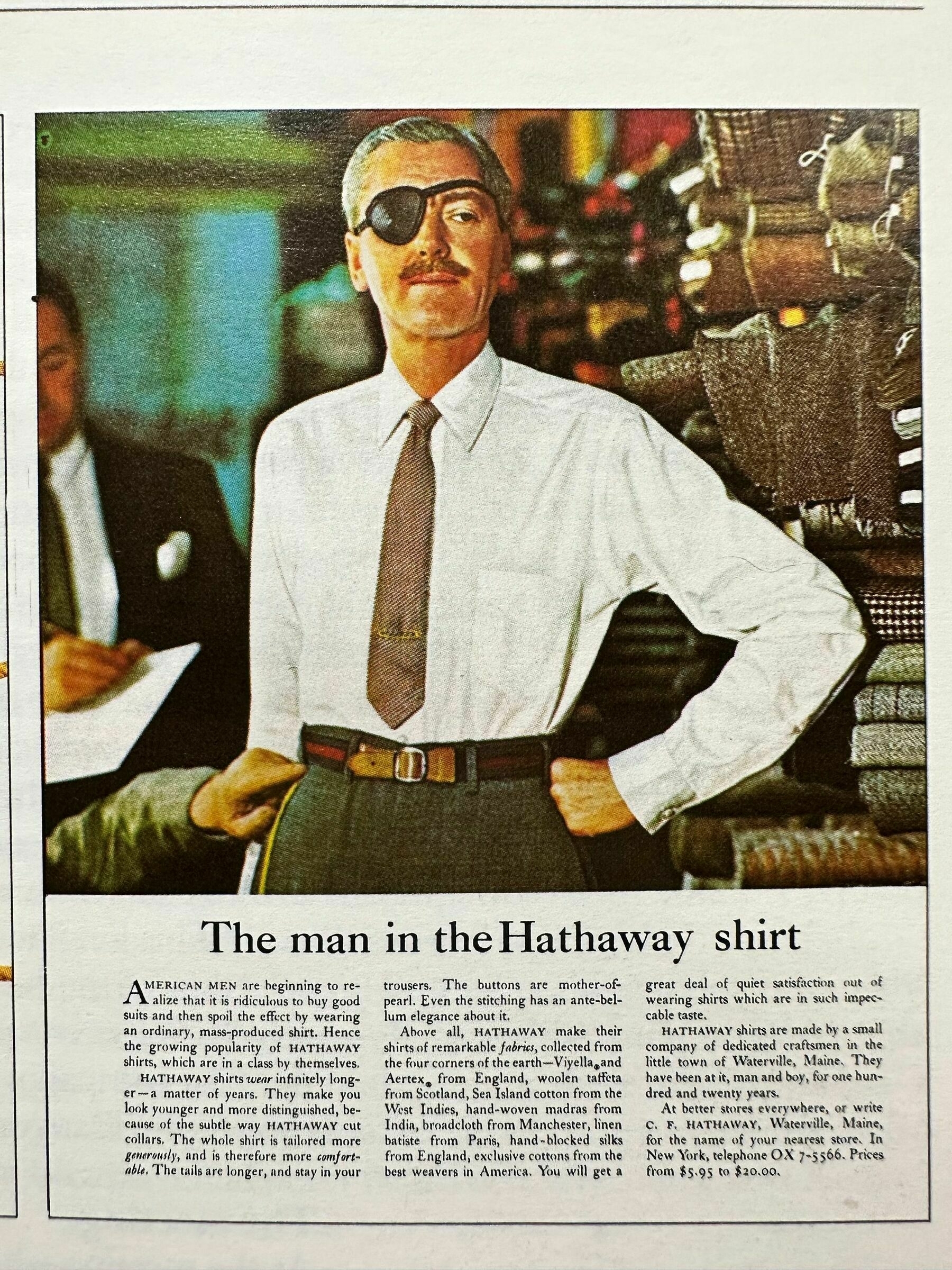
ad copy:
American men are beginning to realize that it is ridiculous to buy good suits and then spoil the effect by wearing an ordinary, mass-produced shirt. Hence the growing popularity of Hathaway shirts, which are in a class by themselves.
Hathaway shirts wear infinitely longer—a matter of years. They make you look younger and more distinguished, because of the subtle way Hathaway cut collars. The whole shirt is tailored more generously, and is therefore more comfortable. The tails are longer, and stay in your trousers. The buttons are mother-of-pearl. Even the stitching has an ante-bellum elegance about it.
Above all, Hathaway make their shirts of remarkable fabrics, collected from the four corners of the earth—Viyella and Aertex from England, woolen taffeta from Scotland, Sea Island cotton from the West Indies, hand-woven madras from India, broadcloth from Manchester, linen batiste from Paris, hand-blocked silks from England, exclusive cottons from the best weavers in America. You will get a great deal of quiet satisfaction out of wearing shirts which are in such impeccable taste.
Hathaway shirts are made by a small company of dedicated craftsmen in the little town of Waterville, Maine, They have been at it, man and boy, for one hundred and twenty years.
At better stores everywhere, or write C. F. HATHAWAY, Waterville, Maine, for the name of your nearest store. In New York, telephone OX 7-5566. Prices from $5.95 to $20.00.
Obama’s speechwriter could be talking about marketing here:
The most important thing about speechwriting — besides being able to string sentences together — is having a sense of empathy. You have to understand your audience and try walking in their shoes. But there are limits to empathy, in terms of imagination… Speechwriters are never putting their own views into a speech.
(isn’t a speech a form of marketing?)
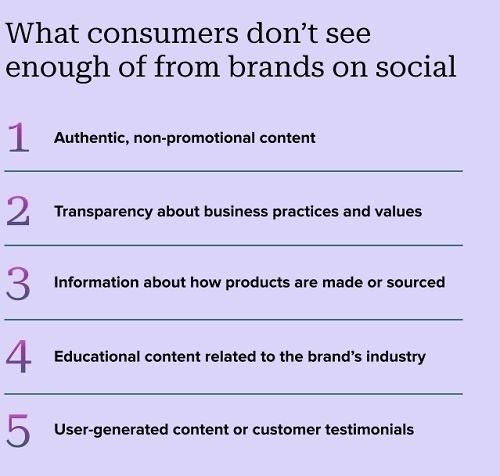
What do users want from your brand on social?
- Responsiveness
- Updates on new products / services
- Exclusive deals
- More authentic, non-promo content
Your social platforms are now your PR, loyalty, promo, and blog channels. (But please still have owned channels for these things too.)
How Will Marketing Survive AI?
Same As We’ve Always Done
It’s not about the platforms or the tactics (or the snake oil).
It’s about meeting the customer:
- where they are
- with a story that resonates
- while putting them at the center
- and sharing the energy you’re made of
In an effort to scale what customers love about your brand using the reach of digital.
Related
 Kyle Mensing
 Kyle Mensing
Google: where the algorithm’s made up and the prices don’t matter
The search engine “frequently” changes the auctions it uses to sell search ads, increasing the cost of ads and reserve pricing by as much as 5% for the average advertiser.
For some queries, the tech giant may have even raised prices by as much as 10%, according to Google Ad executive, Jerry Dischler at the federal antitrust trial.
Nothing like disclosing your monopolistic behavior while on trial for being a monopoly.
Incentives matter.
How to write good marketing messaging:
Write marketing copy, newsletters, emails, and messages as if to a sister, a best friend, or your mom/dad. And not for a state of the union or to a supreme court judge.
Act like you have a personality and the message was written by and for a human.
(That link also has a nice bit on identifying market gaps.)