

Meta is developing its AI search engine (and apparently has the “most-used AI assistant in the world”).
Now OpenAI is fully launching ChatGPT search
ChatGPT can now search the web in a much better way than before. You can get fast, timely answers with links to relevant web sources, which you would have previously needed to go to a search engine for. This blends the benefits of a natural language interface with the value of up-to-date sports scores, news, stock quotes, and more.
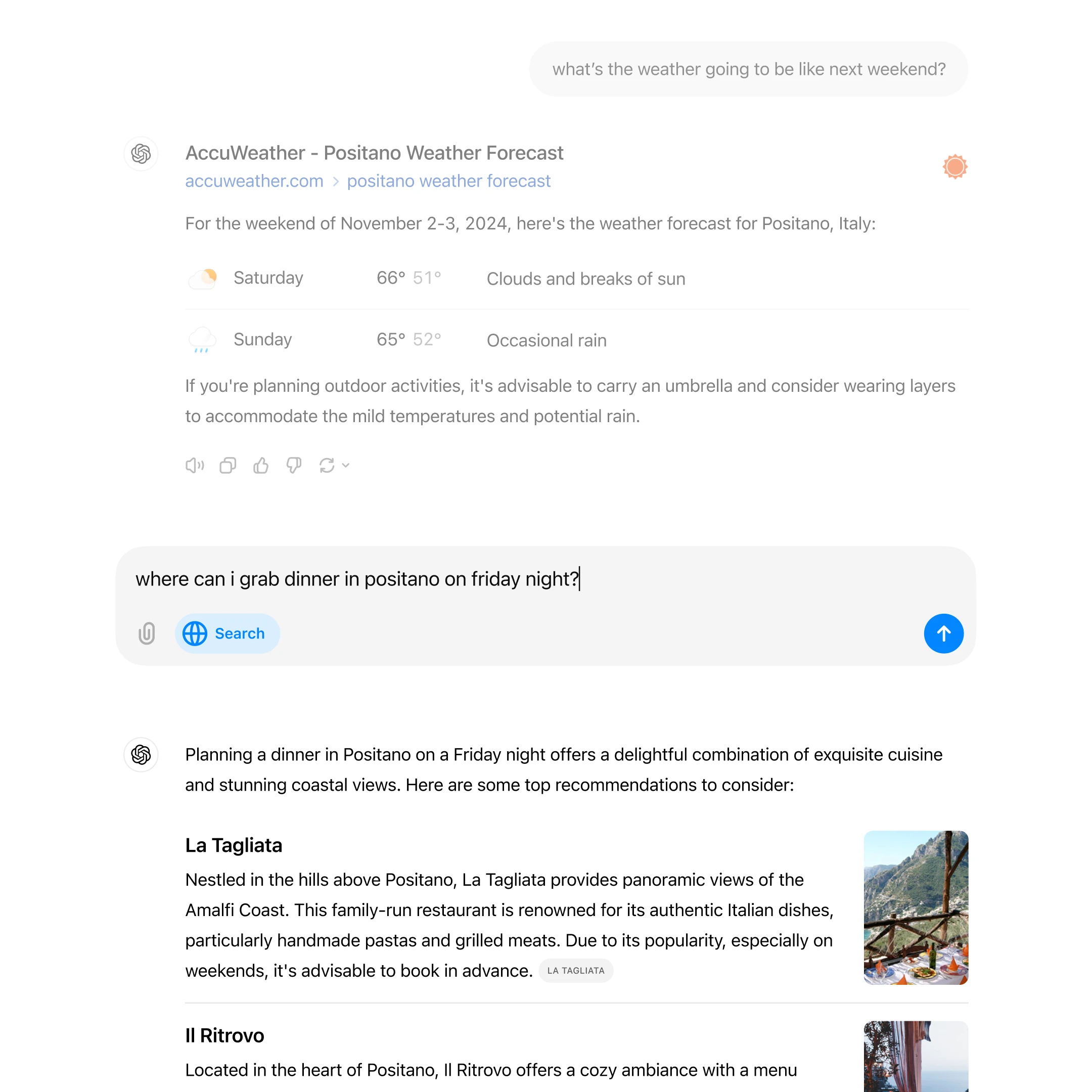
Search is now about your preferred interface, experience, and engine.
We always tell clients that what they think is boring is probably what they need to talk about the most.
Because it might be a mystery to the people you’re trying to talk to.
Your everyday is what someone else is trying to hire for. Or the problem they are trying to solve.
All this to say, I love this quote:
In the words of my late friend Jay Levinson, “Don’t change your story when you’re bored, or when your partner is bored, or when your team is bored. Change your story when your accountant is bored.”
More than 40% of leading brands secure 10% plus of their annual e-commerce revenue from holiday shopping events like Black Friday and Singles Day
Whilst the leading brands secure a significant proportion of revenue from holiday shopping events, 25% of laggards don’t even participate. The brands that capture revenue typically forge deals and partnerships, build inventory, align on promotions, and secure both budget and head count ahead of the shopping season.
This of course compounds as consumers wait for expected deals on shopping days, shifting more of their shopping activity there. Increasing the % of total revenue brands derive from smaller time frames.
Been doing this thing with TV ads lately where I unmute for the last second or, at most, two seconds (the now normalized ad countdown makes this easy), and seeing — that is, hearing — what makes the final sonic impression, and then trying gauge the extent to which advertisers are doing anything in that final moment to catch the ear of and appeal to vigilant ad-muters
Great test not just for ad-muters but to use the peak-end rule.
What are you leaving on? What’s your last moment? What’s your goodbye?
Some homework from Steven Soderbergh:
Just looking at something and going, I like that, and then trying to break down, why do I like that?
What is it about that… that I like?
What do I steal?
What can I repurpose or tweak to make it fit what we’re trying to do?
He steals like an artist. We can steal like marketers.
Pay attention to the messages and artifacts you encounter. If something resonates or stands out, figure out why. Use it in your own work.
via Austin Kleon
Everything is TV Now
Last year the flip happened, people spent more time on TikTok than watching TV.
There was an interesting article from Caroline Mimbs Nyce of The Atlantic, and the title was titled, You're Looking at TikTok All Wrong. The app is basically just broadcast TV now. It does seem like people are treating social media more like televisions, the share of time spent on social media where people are watching video has gone from, I think it was about a third before the pandemic to about two-thirds now.
Small improvements in our systems translate into large improvements to the customer experience.
Everything is customer service.
cranes are a proxy for construction and infrastructure investment. Since both are closely and positively correlated with a growing economy, seeing many cranes along the skyline is a simple but reliable heuristic to know if an economy is doing well or poorly.
In your field of work, what are your cranes on the horizon?